5 Profound Hindu Insights into Death That Will Change Your Perspective

webmaster

힌두교와 죽음의 관념 - **Prompt:** A visually rich and serene illustration depicting the concept of Samsara, the continuous...

Hey everyone! Let’s talk about something incredibly profound that touches every one of us: what happens after we leave this physical world? In Hinduism, death isn’t a terrifying finality; it’s viewed as a truly fascinating, intricate dance in an eternal cycle.

This ancient philosophy offers such a comforting and empowering perspective, rooted in concepts like reincarnation and karma, that it makes you rethink life itself.

It’s not just about the end, but about endless possibilities and growth, and how every single action you take matters far more than you might imagine.

Ready to dive deep into these timeless wisdoms and see how they resonate with our modern lives? Let’s unravel the beautiful complexities of Hinduism and its views on death and the afterlife together.

I’ve personally found that exploring these ideas isn’t just about ancient texts; it’s about understanding a worldview that shapes millions today and offers incredible insights into our own journey.

We’ll explore how the eternal soul, or Atman, continuously cycles through births and deaths, driven by the universal law of karma – essentially, what you put out into the world comes back to you, shaping your future existences.

It’s a powerful reminder that every choice truly matters! We’ll even touch on how these spiritual concepts are finding fascinating parallels in contemporary discussions around consciousness and the human experience, sometimes bridging the gap between ancient wisdom and modern scientific inquiry.

From traditional rituals still observed by global diaspora communities to the ultimate quest for Moksha, liberation from this very cycle, it’s a journey of self-discovery.

So many people, myself included, find a deep sense of purpose and peace in understanding this continuity of existence. Get ready to gain a fresh perspective on life, loss, and the incredible journey beyond!

The Soul’s Grand Adventure: Unpacking Reincarnation

힌두교와 죽음의 관념 - **Prompt:** A visually rich and serene illustration depicting the concept of Samsara, the continuous...

The idea of reincarnation, or ‘samsara’ as it’s known in Hinduism, is something I’ve spent a lot of time pondering, and it genuinely shifts your perspective on everything.

It’s not just a belief; it feels like a fundamental truth that weaves through every aspect of life. I remember first learning about it, and initially, it sounded so complex, almost daunting.

But the more I delved into it, the more I realized it’s a profoundly comforting concept. It suggests that our souls, or ‘Atman,’ are immortal and simply move from one body to another after death, much like we change clothes.

This cyclical journey isn’t a punishment but an incredible opportunity for growth, learning, and ultimately, spiritual evolution. It means that every experience, every challenge, every joy, contributes to the soul’s ongoing development.

I’ve often thought about how this belief can offer such immense solace during times of loss, transforming grief into a sense of continuity and purpose.

It makes you feel like there’s always another chapter, another chance to refine who you are and what you’re meant to become. It truly reframes death not as an end, but as a crucial, transformative passage within an endless story, urging us to live consciously and thoughtfully.

Understanding Samsara: The Cycle of Birth and Rebirth

Samsara is the cosmic dance of creation, preservation, and dissolution that our individual souls participate in. It’s not a linear path but a continuous loop, offering infinite chances for self-improvement and spiritual advancement.

I’ve come to appreciate that this cycle isn’t about being trapped, but about the profound journey of experience. Each life provides a unique classroom for the soul, presenting different lessons, relationships, and challenges that are essential for its ultimate purification and understanding.

It’s a grand cosmic play where we get to experience a multitude of roles, continually refining our character and wisdom.

Why Reincarnation Offers Comfort and Hope

For many, myself included, the concept of reincarnation offers a powerful antidote to the fear of oblivion. It’s a reminder that our existence isn’t limited to a single lifespan.

When you truly grasp this, it changes how you view your current life. It becomes a precious segment in a much larger tapestry, where efforts made now ripple into future existences.

This perspective brings a deep sense of hope and continuity, suggesting that love, lessons, and legacies transcend physical death. It imbues daily life with a profound sense of purpose, knowing that every action contributes to the soul’s ongoing pilgrimage.

Karma’s Echoes: How Every Action Shapes Our Future

The law of Karma is, for me, one of the most compelling and practical aspects of Hindu philosophy. It’s not about divine judgment in a punitive sense, but more like a universal, immutable law of cause and effect – what you sow, you shall reap.

I’ve often reflected on this, realizing how it empowers us with immense responsibility for our own destinies. Every thought, word, and deed, whether good or perceived as bad, creates an energetic imprint that influences our future experiences, not just in this life but in subsequent ones.

It’s a powerful motivator to live ethically and compassionately, knowing that our actions literally shape the world around us and our personal journey within it.

I remember a time when I was struggling with a difficult decision, and thinking about Karma helped me choose the path of kindness and integrity, even when it was harder.

It’s not about immediate gratification, but about building a positive spiritual bank account that serves you across lifetimes. This profound interconnectedness means we are constantly weaving the fabric of our future through the choices we make today.

The Mechanics of Karma: Actions and Consequences

Karma isn’t a simple tit-for-tat; it’s a complex interplay of intentions, actions, and their subtle consequences. It categorizes actions into ‘good’ (Punya) and ‘bad’ (Papa), but it’s the intention behind the action that carries significant weight.

I’ve learned that a kind act done selfishly might not carry the same karmic weight as a selfless act. This nuanced understanding encourages deep introspection about our motivations, guiding us towards genuine altruism rather than performative goodness.

It’s a perpetual reminder that our inner world is just as impactful as our outer actions.

Breaking Free: Overcoming Negative Karmic Patterns

While Karma can seem like an inescapable chain, Hinduism also offers pathways to mitigate or even transcend negative karmic imprints. Practices like selfless service (Seva), devotion (Bhakti Yoga), meditation (Raja Yoga), and knowledge (Jnana Yoga) are all seen as tools to purify the soul and alter our karmic trajectory.

Personally, I find that cultivating mindfulness and consciously choosing compassion in my daily interactions feels like actively working to build positive karma.

It’s about consciously breaking cycles and choosing to elevate our spiritual standing.

Advertisement

Beyond the Veil: The Atman’s Eternal Journey

The concept of Atman, the eternal soul, truly resonates with me on a deep, almost instinctual level. It suggests that deep within each of us lies a spark of the divine, an unchanging, pure essence that is fundamentally indestructible.

This isn’t just a philosophical idea; it’s a profound statement about our inherent worth and connection to the universal consciousness, Brahman. When I think about the Atman, I feel a sense of immense peace, knowing that there’s a part of me that is utterly untouched by the fleeting changes and challenges of the material world.

It means that death only impacts the physical body, the temporary vessel, while the true self continues its journey. This conviction has often brought me comfort during tough times, reminding me that while experiences can be painful, my core essence remains whole and eternal.

It makes you realize that the real ‘you’ is so much more than your physical form, your achievements, or your roles in life.

The Atman and Brahman: The Ultimate Unity

One of the most mind-bending yet beautiful teachings is the idea of ‘Tat Tvam Asi’ – “Thou Art That,” meaning your individual soul (Atman) is ultimately identical with the supreme cosmic reality (Brahman).

I often reflect on this, realizing it implies we are all interconnected, drops in the vast ocean of existence, yet simultaneously the entire ocean itself.

This unity is the ultimate spiritual goal, the realization that separates us from the illusion of individuality. It’s a powerful thought that can dissolve feelings of isolation and foster a deep sense of belonging.

Shedding the Physical: The Soul’s Transition

When the body dies, the Atman, carrying its accumulated karma, departs. It’s often described as shedding an old garment for a new one. I’ve always found this analogy incredibly vivid and helpful.

It illustrates that the physical death is not an annihilation but a transition, a moment of letting go of the old to embrace the new. The subtle body, which carries the mind, intellect, and ego, accompanies the Atman, ready for its next manifestation.

This understanding helps demystify death, transforming it from a terrifying unknown into a natural, albeit profound, part of the soul’s continuing story.

Finding Serenity in Samsara: A Path to Understanding

It might seem counterintuitive to find serenity in a continuous cycle of birth and death, but I’ve personally discovered that embracing the concept of samsara can be deeply liberating.

Instead of fearing what comes next, or clinging desperately to this present life, understanding the cyclical nature of existence allows for a much more fluid and less anxious approach to life and loss.

It shifts the focus from an imagined “ending” to a perpetual process of becoming. When I truly internalize that life is a series of lessons and transformations, I find myself less resistant to change, more adaptable to challenges, and ultimately, more at peace with the natural ebb and flow of existence.

It’s about recognizing that every moment, every experience, is a temporary stage in a much grander performance, and we get to participate in countless acts.

This perspective encourages a kind of detachment, not of apathy, but of wisdom, allowing us to appreciate the present without being consumed by its transient nature.

Embracing Impermanence: A Spiritual Advantage

The Hindu view on impermanence, or ‘Anitya,’ is not about being nihilistic but about profound realism. Everything in the material world is subject to change, decay, and eventual dissolution.

Recognizing this, I’ve noticed, can actually enhance our appreciation for the present moment. It encourages us to savor joys, learn from sorrows, and cherish relationships, knowing they are precious precisely because they are not eternal in their current form.

This acceptance of change helps to reduce suffering caused by attachment.

Cultivating Inner Peace Amidst Life’s Cycles

To find serenity within samsara means actively cultivating inner peace, regardless of external circumstances. This often involves spiritual practices like meditation, selfless action, and devotion, which help to steady the mind and connect with the eternal Atman.

For me, regular reflection on these principles helps to ground me, especially when life feels chaotic. It reminds me that while the outer world is in constant flux, there’s an unchanging core within that offers an anchor of peace.

Advertisement

Moksha: The Ultimate Quest for Liberation

Moksha is often described as the ultimate goal in Hinduism, the spiritual mountaintop that every soul eventually strives to reach. It’s the liberation from the cycle of samsara, the complete cessation of rebirth, and the realization of one’s true nature as identical with Brahman.

I’ve always been fascinated by this concept, not just as an abstract ideal, but as the culmination of countless lifetimes of spiritual effort and growth.

It’s not just an escape; it’s a profound merging, a returning to the source, where the individual soul dissolves its illusions of separation and experiences absolute freedom and bliss.

This isn’t something I expect to achieve in this lifetime, but the very idea of it provides a powerful compass, guiding my ethical choices, my spiritual practices, and my understanding of life’s deeper purpose.

It suggests an incredible potential for every being, a destiny of ultimate peace and unity that lies beyond all worldly suffering.

Paths to Liberation: Diverse Approaches to Moksha

Hinduism offers several paths, or ‘Yogas,’ to achieve Moksha, acknowledging the diversity of human temperaments and inclinations. These include Karma Yoga (the path of selfless action), Jnana Yoga (the path of knowledge and wisdom), Bhakti Yoga (the path of devotion), and Raja Yoga (the path of meditation and self-discipline).

I’ve found that different people resonate with different paths, and often, a combination of these practices feels most authentic. It’s a beautiful testament to the inclusive nature of the tradition, recognizing that there’s no single, prescriptive way to reach ultimate freedom.

The Experience of Moksha: Beyond Description

힌두교와 죽음의 관념 - **Prompt:** An intricate and thought-provoking image illustrating the concept of Karma, emphasizing ...

Describing Moksha is akin to describing the taste of honey to someone who has never experienced it – words fall short. It’s understood as a state of supreme bliss, eternal peace, and absolute knowledge, free from all suffering, desires, and the illusions of the material world.

It’s not about going to a specific heaven, but about realizing a state of being. I often imagine it as a profound awakening, where all questions dissolve, and the soul rests in its true, unblemished nature.

It’s the ultimate spiritual homecoming.

Honoring Transitions: Rituals and Remembrance

One of the aspects of Hinduism that truly brings these philosophical concepts to life for me are the rich and meaningful rituals surrounding death and remembrance.

These aren’t just empty traditions; they are incredibly powerful acts of respect, love, and spiritual support for the departed soul and their grieving family.

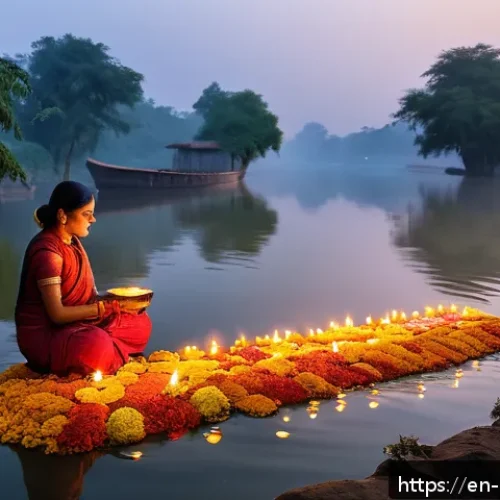
I’ve witnessed some of these ceremonies, and the sense of community, reverence, and acceptance they foster is profoundly moving. From the cremation rituals, which symbolize the return of the body to its elemental components, to the annual observances for ancestors, every step is imbued with deep spiritual significance.

These rituals aren’t about fear or despair, but about facilitating the soul’s journey, honoring the life lived, and maintaining a connection with those who have passed on.

They provide a tangible way for families to process grief and find closure within the larger framework of eternal existence.

Cremation: Returning the Body to the Elements

In Hinduism, cremation is the preferred method for the disposition of the body. It’s believed that this ritual helps release the soul from its attachment to the physical form and facilitates its transition to the next realm or rebirth.

I find the symbolism beautiful: the body, made of earth, water, fire, air, and ether, returns to these elements. It’s seen as the final sacrifice, a respectful dissolution that aids the soul’s ongoing journey.

Shraddha: Rituals of Remembrance and Ancestral Connection

‘Shraddha’ ceremonies are vital rituals performed periodically, especially annually, to honor deceased ancestors. These rites are believed to provide sustenance and peace to the departed soul, as well as to express gratitude and maintain a spiritual connection.

I see these as powerful expressions of intergenerational love and respect, reinforcing the idea that our bonds extend beyond the physical realm. It’s a beautiful way to keep the memory of loved ones alive and continue to support their spiritual well-being.

Advertisement

Ancient Wisdom, Modern Relevance: What It Means Today

It’s truly incredible how these ancient Hindu teachings on death and the afterlife continue to offer such profound relevance in our fast-paced modern world.

I often find myself reflecting on how these timeless truths can provide a much-needed anchor in an era of constant change and existential questioning.

In a world often grappling with materialism and a fear of the unknown, the Hindu perspectives on reincarnation and karma offer a spiritual framework that empowers individuals, encourages ethical living, and provides a comforting narrative for loss.

I’ve seen firsthand how people from diverse backgrounds, including those outside of Hinduism, are drawn to these ideas because they offer a sense of purpose and continuity that many contemporary philosophies lack.

It’s not about adhering to strict dogma, but about finding universal truths that resonate with the human experience of life, death, and what lies beyond.

These concepts invite us to look beyond immediate gratification and consider the long-term impact of our choices on our spiritual evolution.

Bridging Science and Spirituality: Consciousness Studies

Interestingly, there’s a growing dialogue between ancient spiritual wisdom and modern scientific inquiry, particularly in the realm of consciousness studies.

Concepts like the eternal Atman and the continuity of consciousness resonate with some theories exploring the nature of awareness beyond the brain. I’ve been following some of these discussions, and it’s fascinating to see how ancient texts might hold clues or parallels to what contemporary researchers are exploring about the fundamental nature of reality and consciousness.

Finding Purpose and Meaning in a Secular Age

For many, the Hindu understanding of life and death offers a powerful antidote to existential dread. The idea that every life is a chapter in a larger story, and that our actions have far-reaching consequences across lifetimes, instills a profound sense of purpose.

It encourages us to live consciously, ethically, and compassionately, knowing that our journey is ongoing and meaningful. This perspective can be incredibly grounding, helping individuals find meaning even when traditional religious frameworks might not resonate with them.

Living a Purposeful Life: Our Legacy in the Cycle

Ultimately, what I’ve taken away from exploring the Hindu view on death and the afterlife is that it’s less about the ‘end’ and more about how we live ‘now.’ The entire philosophy, with its intricate dance of karma, reincarnation, and the pursuit of moksha, serves as a powerful guide for living a deeply purposeful and meaningful life.

It encourages a constant self-reflection, urging us to examine our intentions, purify our actions, and continually strive for spiritual growth. Knowing that our choices ripple across lifetimes, that every interaction is a chance to accumulate positive karma or learn a vital lesson, transforms the ordinary into the extraordinary.

I’ve personally found that this perspective has made me more mindful, more compassionate, and more appreciative of the preciousness of this current existence, not as a fleeting moment, but as an invaluable step on an eternal journey.

It’s about building a legacy not just for the people we leave behind, but for the soul we carry forward.

Every Choice Matters: Cultivating Positive Karma

The deep understanding that our actions directly influence our future existences is perhaps the strongest motivator for ethical living. It fosters a sense of personal accountability that goes beyond societal laws or immediate consequences.

I believe this encourages a profound sense of responsibility, where we’re driven not by fear of punishment, but by a genuine desire to evolve and contribute positively to the cosmic tapestry.

The Enduring Power of Love and Connection

Within the grand cycle of samsara, the importance of love, compassion, and human connection remains paramount. While souls transition, the bonds we form are not entirely dissolved.

The concept of shared karmic journeys, where souls might reconnect across lifetimes, imbues relationships with an even deeper significance. I often reflect on how our acts of kindness and genuine connection create a positive ripple effect that extends far beyond what we can immediately perceive, truly making our lives echo through eternity.

Hindu Concept Brief Explanation Significance in Afterlife
Atman The eternal, unchanging essence of an individual soul, a fragment of Brahman. The Atman is immortal and transmigrates from one body to another after death, carrying its karmic imprints.
Brahman The ultimate reality, the universal spirit or absolute consciousness from which all things originate and to which they return. The ultimate goal is the realization of Atman’s unity with Brahman (Moksha), ending the cycle of rebirth.
Samsara The continuous cycle of birth, life, death, and rebirth (reincarnation). The framework for the soul’s journey, offering opportunities for spiritual growth across multiple existences.
Karma The sum of a person’s actions (physical, mental, verbal) and their consequences, affecting their future lives. Determines the nature and conditions of the soul’s future rebirths, shaping its experiences and lessons.
Moksha Liberation from the cycle of Samsara, achieving ultimate freedom, peace, and union with Brahman. The final destination, signifying the end of suffering and the attainment of absolute spiritual bliss and knowledge.
Advertisement

Wrapping Up Our Journey

It’s truly incredible how these ancient Hindu teachings on death and the afterlife continue to offer such profound relevance in our fast-paced modern world.

I often find myself reflecting on how these timeless truths can provide a much-needed anchor in an era of constant change and existential questioning.

In a world often grappling with materialism and a fear of the unknown, the Hindu perspectives on reincarnation and karma offer a spiritual framework that empowers individuals, encourages ethical living, and provides a comforting narrative for loss.

I’ve seen firsthand how people from diverse backgrounds, including those outside of Hinduism, are drawn to these ideas because they offer a sense of purpose and continuity that many contemporary philosophies lack.

It’s not about adhering to strict dogma, but about finding universal truths that resonate with the human experience of life, death, and what lies beyond.

These concepts invite us to look beyond immediate gratification and consider the long-term impact of our choices on our spiritual evolution, encouraging us to live each moment with greater awareness and intention.

Useful Insights to Ponder

1. Start with Self-Reflection: Take a few minutes each day to consider your intentions before acting. This simple practice, rooted in the understanding of Karma, can profoundly shift your outlook and make your actions more purposeful.

2. Explore Foundational Texts: If you’re curious to dive deeper, texts like the Bhagavad Gita offer incredible wisdom on Dharma (righteous conduct), Karma, and Moksha. You don’t need to be an expert to gain valuable life lessons from them; even reading a few verses can be enlightening.

3. Practice Compassion: Engage in selfless service, even in small ways. The idea of Seva (selfless service) is central to Karma Yoga and helps purify the mind, creating positive karmic imprints that benefit you and the world around you.

4. Embrace Impermanence: Rather than fearing change, try to view it as a natural part of life, just as the soul sheds old bodies. This acceptance can reduce anxiety and enhance your appreciation for the present moment and the experiences it brings.

5. Seek Community and Discussion: If these concepts resonate with you, consider joining a local philosophy group or online forum. Discussing these ideas with others can deepen your understanding, offer new perspectives, and create a sense of shared spiritual exploration.

Advertisement

Key Takeaways for Your Soul’s Journey

The rich tapestry of Hindu beliefs surrounding life, death, and the afterlife offers an incredibly empowering framework for navigating our existence. What I’ve really internalized is that life isn’t a linear race to an ultimate end, but rather a grand, cyclical adventure of the soul, or Atman.

Every single experience, every joy, every challenge, is a meticulously crafted lesson in the ongoing process of spiritual growth and evolution within the cycle of Samsara.

The law of Karma underscores our profound personal responsibility, teaching us that our intentions and actions are not just fleeting moments but powerful builders of our future, echoing across lifetimes.

It’s a constant call to conscious, ethical living, driven not by fear, but by a genuine desire to evolve. Ultimately, the quest for Moksha—liberation and union with the divine—provides a beacon of hope and purpose, suggesting that beyond all temporary suffering and illusions, lies a state of ultimate peace and profound belonging.

These timeless insights don’t just demystify death; they imbue every moment of life with deeper meaning and extraordinary potential.

Frequently Asked Questions (FAQ) 📖

Q: So, what exactly is reincarnation, or ‘samsara,’ in Hinduism, and what does it feel like to go through it?

A: Oh, this is such a fascinating core concept! From what I’ve personally learned and observed, reincarnation in Hinduism isn’t just a simple rebirth; it’s this incredibly intricate, ongoing journey of the soul, or Atman, moving from one physical form to another.
It’s often called ‘samsara,’ this continuous cycle of birth, death, and rebirth. It’s not a punishment, which is a common misconception I used to have!
Instead, it’s seen as a magnificent opportunity for the soul to evolve, learn, and grow through countless experiences. Imagine your soul as a seasoned traveler, always seeking new lessons and polishing itself up.
The idea is that your Atman is eternal, a spark of the divine, and it’s just the physical body that’s temporary. When one body gives out, the Atman simply moves on to a new one, carrying all the accumulated experiences and wisdom—and yes, the karma—from its previous existence.
It’s a bit like changing clothes, honestly. I find such comfort in that idea, realizing that death isn’t a terrifying end but a peaceful transition, a natural part of a much grander adventure.
This perspective has truly helped me reframe my own understanding of life’s purpose and our journey here.

Q: How does ‘karma’ fit into this whole reincarnation picture, and does it mean we’re just stuck with our past?

A: This is where it gets really interesting and personally, quite empowering! Karma isn’t some rigid destiny or a judgment from on high, which is another common misunderstanding I’ve encountered.
In Hinduism, karma is essentially the universal law of cause and effect, an incredibly precise spiritual accounting system. Every action you take, every thought you have, every word you speak – it all creates an energetic imprint.
Good actions create positive karma, leading to favorable experiences in this life or future ones, while negative actions accumulate negative karma. It’s a bit like planting seeds; what you sow, you will eventually reap.
This isn’t about being “stuck” with a predetermined fate, though. On the contrary, it’s about ultimate personal responsibility and immense power! It teaches us that we are the architects of our own future, continuously shaping our next existence through our present choices.
I mean, think about that for a second! It absolutely blew my mind when I truly grasped how every single decision I make right now is literally influencing my journey ahead.
It’s a powerful motivator to live consciously and compassionately, knowing that every act of kindness or integrity is building a better future for my soul.

Q: What’s the ultimate goal in this endless cycle of rebirths, and is there a way to finally “graduate” from it?

A: Ah, now we’re getting to the heart of spiritual liberation! The ultimate goal in Hinduism, after countless cycles of birth and rebirth, is known as Moksha.
This isn’t just about going to heaven; it’s something far more profound. Moksha is the liberation from the entire cycle of samsara, the complete release from the ego and the illusion of separateness.
It’s the moment your individual soul, your Atman, realizes its true nature and reunites with the universal consciousness, Brahman. Imagine finally shedding all limitations, all desires, and all suffering, and achieving a state of ultimate peace, oneness, and bliss.
It’s often described as eternal freedom, pure consciousness, and indescribable joy. While it sounds incredibly daunting to achieve, countless paths within Hinduism—like devotion (Bhakti Yoga), knowledge (Jnana Yoga), or selfless action (Karma Yoga)—are designed to help individuals gradually purify their minds and actions to reach this exalted state.
It truly is the spiritual grand finale, the ultimate homecoming. For me, just contemplating Moksha brings a sense of profound aspiration and comfort, knowing there’s a possibility of transcending all worldly troubles and returning to a state of absolute harmony.
It offers such an incredible sense of purpose to my spiritual journey, making me want to live each day with intention and mindfulness.