Ever wondered about the ancient heart of India, a place where spirituality and history are so deeply intertwined they become one magnificent story? That’s exactly where we’re headed today, exploring the profound journey of Hinduism and the remarkable Dravidian people.
Their millennia-old traditions and vibrant cultures have not only sculpted the very essence of the Indian subcontinent but continue to captivate and inspire millions worldwide.
From the mysteries of their ancient origins to the enduring impact on today’s global landscape, there’s a richness here that goes far beyond what textbooks can convey.
I’ve found that understanding this intricate heritage offers such a unique perspective on human civilization itself, and I promise you, it’s a journey well worth taking.
Get ready to uncover the truly fascinating details that await us below!
Ancient Echoes: The Enduring Spiritual Heart of India
Where the River of Faiths Began to Flow
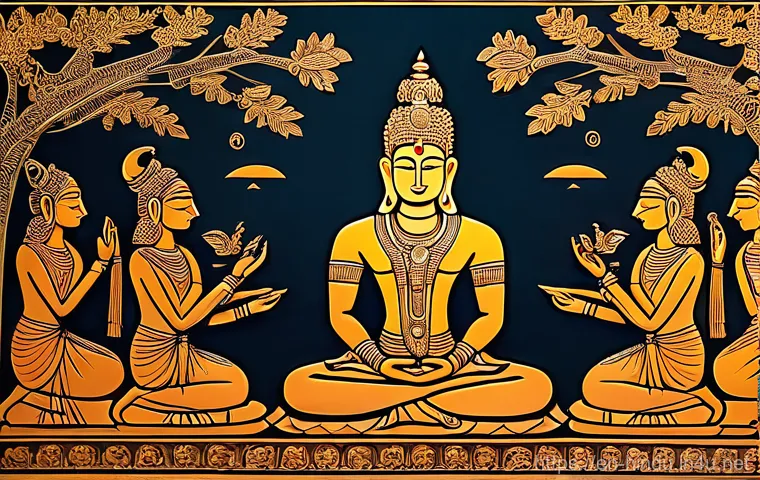
Have you ever stopped to ponder how incredibly ancient some of our spiritual traditions truly are? It’s mind-boggling, right? When I think about Hinduism, it’s not just a religion; it’s a vast, flowing river, constantly evolving and absorbing everything in its path, carrying whispers of civilizations long past.
It’s like discovering an old, gnarled tree whose roots run so deep, you realize it’s been anchoring the land for thousands of years, quietly shaping everything around it.
This spiritual journey didn’t just appear out of nowhere; it emerged from the very soil of the Indian subcontinent, steeped in traditions that predate many of the grand narratives we often hear.
Before the melodic Sanskrit hymns filled the air, before the elaborate Vedic fire rituals became commonplace, this land was already alive with profound spiritual practices.
The Dravidians, often considered the subcontinent’s original inhabitants, built cities like those of the Indus Valley Civilization as far back as 2500 BCE, leaving behind tantalizing artifacts – seals depicting horned gods, figures deep in yogic meditation, and revered sacred animals.
To me, these aren’t just archaeological finds; they’re echoes of a spiritual lineage that feels incredibly tangible, a proto-Hinduism waiting to fully blossom.
It’s a powerful reminder that history, especially spiritual history, is never a simple, linear story but a richly woven tapestry. When the Indo-Aryans arrived much later, around 1500 BCE, they brought their Vedic traditions, and what happened next was truly extraordinary: a fusion, a magnificent blending of beliefs, languages, and rituals that created the vibrant Hinduism we recognize today.
It’s a story of absorption, adaptation, and transformation, highlighting a fundamental strength that has allowed this tradition to endure for millennia.
I find it absolutely fascinating how such deep historical interactions have sculpted a faith that is so diverse and resilient.
Dravidian Threads Woven into the Fabric of Sanatana Dharma
It’s easy to look at the grand narratives and miss the subtle, yet powerful, influences that shaped something as monumental as Hinduism. From my perspective, understanding the Dravidian contribution is like finding the vibrant, foundational threads in a complex embroidery.
Many scholars, including Finnish Indologist Asko Parpola, have suggested that the undeciphered Indus script might even represent a Dravidian language, hinting at how deeply intertwined these ancient cultures were from the very beginning.
Think about it – elements we now see as distinctly Hindu have deep roots in Dravidian practices. The prominence of Goddess worship, for instance, with figures like Kali, Meenakshi, and Mariamman, carries the raw, earthbound spirit of ancient mother goddess traditions, which flourished in Dravidian culture and continue to thrive, especially in South Indian temple worship.
And then there’s Shiva! While Vedic texts focused on gods like Indra and Agni, Shiva, who became a cornerstone of Hinduism, seems to have stronger origins in the yogic and ascetic traditions of the Dravidians.
Even the term “linga,” so closely associated with Shiva, has Dravidian roots. This isn’t just academic; it paints a picture of a continuous spiritual conversation, a dynamic exchange where both sides enriched each other.
The focus on elaborate temple worship, daily pujas, and personal devotion (bhakti) that we see in much of Hinduism today, especially in South India, feels distinctly non-Vedic in origin, likely stemming from Dravidian spiritual practices that prioritized direct interaction with the divine.
This deep cultural amalgamation truly makes Hinduism a grand symphony, where Dravidian traditions provided the rhythm, and Vedic influences layered in the melody.
It’s not just a survival of practices; it’s a living, breathing testament to the power of cultural synthesis.
Architectural Marvels: Stones That Speak Volumes
The Grandeur of Southern Sanctuaries
Stepping into a South Indian temple is an experience that truly moves you, it’s not just about witnessing ancient structures; it’s like walking into a living, breathing testament to devotion and artistry that has spanned centuries.
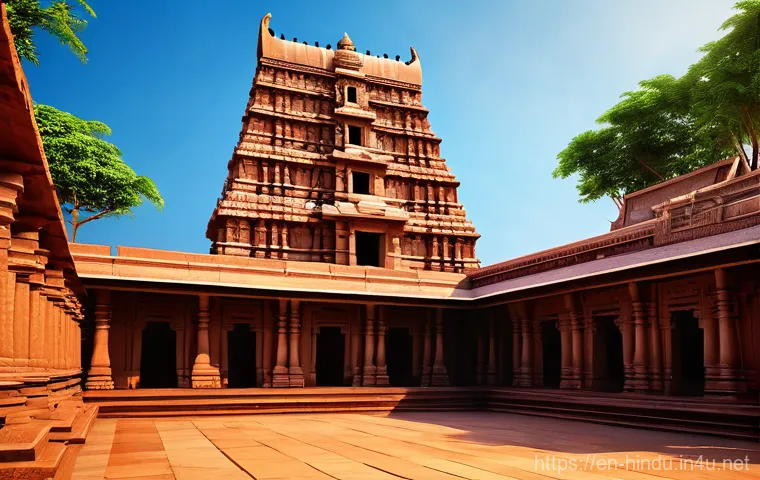
I remember visiting a temple in Tamil Nadu, and the sheer scale of the towering *gopurams* just took my breath away. These aren’t just gatehouses; they’re massive, intricately carved pyramids that often dwarf the central shrines, covered in a kaleidoscopic array of deities and mythical creatures.
It’s a distinct feature of Dravidian architecture, contrasting beautifully with the typically curvier, inward-rising *shikharas* found in North Indian temples.
The evolution of this architectural style, known as Dravidian architecture, has roots dating back to the Gupta period, with the earliest surviving examples being the 7th-century rock-cut shrines at Mahabalipuram, including the iconic Shore Temple.
These incredible structures, often carved from a single piece of rock, are like monolithic poetry, showcasing an artistic and engineering prowess that still baffles me.
The external walls are segmented with pilasters and house niches filled with stunning sculptures, telling stories from Hindu mythology. This style reached its zenith under empires like the Cholas and Vijayanagara, who built colossal temples like the Brihadeeswarar Temple in Thanjavur.
These temples aren’t just places of worship; they’re comprehensive artistic statements, blending sculpture, painting, and engineering into a harmonious whole that evokes a sense of profound spiritual presence.
Standing within their ancient walls, I’ve always felt a deep connection to the countless generations who poured their heart and soul into creating these sacred spaces.
Evolution of Sacred Spaces: From Caves to Colossal Complexes
The journey of temple architecture in South India is a story of incredible innovation and evolving devotion. What started with humble rock-cut caves, like those found in Badami, dating back to the 6th century CE, gradually transformed into the sprawling temple complexes we admire today.
The Pallavas, who ruled from the 3rd to 10th centuries CE, were instrumental in this transition, moving from rock-cut to structural temples, with their masterpieces at Mahabalipuram being a UNESCO World Heritage Site.
Later dynasties, such as the Chalukyas and the Hoysalas, further refined these styles, creating unique regional variations like the Vesara style, which beautifully blends both northern and southern elements.
The sheer scale of these projects is astounding, often involving multiple enclosures, each with its own grand *gopuram*. By the Vijayanagara period (14th-16th centuries), these gateway towers became so dominant they often overshadowed the central temple *vimana* itself.
It’s a fascinating reflection of how public worship and grand ceremonial processions became increasingly central to religious life. When you visit places like Hampi, the former capital of the Vijayanagara Empire, you see this legacy everywhere – a network of still-used temples amidst sprawling ruins, each structure telling a tale of devotion, power, and artistic genius.
The focus on guardian deities at entrances, like the imposing *dvarapalakas*, and the deities carved into exterior niches (*goshtams*) are all part of this rich architectural vocabulary.
For me, these sites aren’t just historical relics; they’re vibrant canvases that reveal the intricate relationship between faith, art, and the human spirit, a story that continues to resonate today.
| Architectural Style | Key Features | Notable Examples |
|---|---|---|
| Dravidian Style | Pyramidal towers (Vimana) over sanctuary, often dwarfed by large, ornate gateway towers (Gopuram). Sculpted exterior walls with niches for deities. Extensive use of granite. | Brihadeeswarar Temple (Thanjavur), Shore Temple (Mahabalipuram), Meenakshi Temple (Madurai) |
| Vesara Style (Chalukyan) | Hybrid style blending Dravidian and Nagara (North Indian) elements. Often features sandbox technology for Vimana construction. | Temples at Pattadakal, Aihole, Badami (Karnataka) |
| Vijayanagara Style | Combination of earlier South Indian styles. Distinctive Yali pillars (charging horse motifs), ornate pillared *mandapas*. Focus on grand scale and elaborate carvings. | Vittala Temple (Hampi), Virupaksha Temple (Hampi) |
Spiritual Alchemy: Merging Beliefs, Forging a Legacy
The Synthesis of Sacred Traditions
If you ask me, one of the most incredible aspects of Hinduism is its uncanny ability to synthesize, to take diverse threads and weave them into a stronger, richer fabric.
It’s truly a testament to its flexibility and inclusive spirit. Historians and scholars largely agree that modern Hinduism isn’t from a single source but is a complex fusion, emerging from ancient Dravidian traditions, the practices of the Indus Valley Civilization, and later influences from the Indo-Aryans.
This isn’t just theory; it’s visible in everything from language to ritual. Oldest Sanskrit texts, for instance, contain words borrowed directly from Dravidian languages, showing an undeniable linguistic interplay that reflects deeper cultural exchanges.
And think about the pantheon of gods – while the Vedas focused on deities like Indra, the widespread worship of major gods like Shiva, Vishnu, and Devi (the Mother Goddess) really took prominence during later periods, often evolving from existing indigenous and Dravidian traditions.
This “Hindu synthesis” truly blossomed between 500 BCE and 300 CE, a period that saw the composition of great epics like the *Mahabharata* and *Ramayana*, and the first *Puranas*, which laid the mythological and philosophical foundations for much of what we consider classical Hinduism.
What I find so compelling is that this wasn’t a one-sided assimilation; it was a dynamic process where traditions merged, absorbed, and transformed each other, leading to a religion that simply cannot be boxed into one origin story.
This open-ended, evolving nature is, in my experience, precisely why Hinduism has endured for thousands of years and continues to grow and adapt today.
It’s a beautiful example of how spiritual beliefs can transcend individual origins to create something universally resonant.
The Bhakti Movement: A Revolution of Devotion
One of the most transformative spiritual movements in Indian history, in my humble opinion, is the Bhakti movement. Emerging around the 7th century CE, particularly vibrant in South India, it completely shifted the focus of religious expression.
Before Bhakti, religious practices could often feel a bit distant, centered on elaborate Vedic fire sacrifices and complex rituals. But Bhakti changed all that!
It championed a deeply personal, emotional devotion (*bhakti*) to a chosen deity as the primary path to salvation, making spirituality accessible to everyone, regardless of caste or social standing.
This felt like a spiritual revolution, bringing the divine closer to the individual heart. Bhakti saints and poets, like the Tamil Alvars and Nayanmars, composed incredibly moving devotional hymns and poems, expressing an intense love and longing for the divine.
I’ve listened to some of these chants, and the raw emotion in them is absolutely captivating, truly touching the soul. This movement fostered a profound shift towards idol worship, temple-centric devotion, and grand processions, which, as we discussed, have strong echoes of older Dravidian practices.
The Bhakti movement fundamentally shaped modern Hinduism, emphasizing a direct, heartfelt relationship with the divine. It created a vibrant, inclusive spiritual landscape that continues to thrive, proving that true faith often finds its most powerful expression in simplicity and genuine devotion.
It’s this kind of authentic, personal connection that I believe resonates deeply with people even today.
Living Traditions: Modern Echoes of Ancient Wisdom
Beyond Temples: Daily Life and Enduring Practices
It’s easy to think of ancient traditions as something confined to history books or grand monuments. But what I’ve personally experienced and observed is that the spiritual heartbeat of India, deeply informed by its Dravidian roots and Vedic synthesis, continues to pulse through everyday life.
Many practices we see today, from the daily *pujas* performed in homes to the vibrant festivals that light up villages and cities, carry the legacy of millennia-old customs.
The veneration of village deities, for example, often guardian spirits or ancestral heroes, is a cornerstone of Dravidian folk religion, with figures like Aiyanar, depicted as a fierce warrior, still propitiated for protection.
Even the profound reverence for the divine feminine, with goddesses like Amman (Mariamman or Durga), speaks to ancient Mother Goddess worship evident in the Indus Valley Civilization.
These aren’t just relics; they’re living traditions, vibrant and essential to millions. When I’ve traveled through South India, I’ve seen how deeply these local practices are interwoven with broader Hindu traditions, often blending seamlessly.
The focus on ancestor worship, with memorial stones for fallen heroes, is another powerful example of how the past informs the present. These are not just abstract beliefs; they are practical ways of life, offering guidance, comfort, and community.
The fact that Hinduism lacks a single founder or central dogma has actually been its strength, allowing it to adapt and integrate diverse beliefs and practices over time, ensuring its longevity and continued relevance.
It’s a continuous, dynamic engagement with spirituality that I find incredibly inspiring.
Yoga, Meditation, and Ayurveda: Gifts to the World
Now, let’s talk about something truly amazing – the global impact of ancient Indian wisdom! It’s astonishing to see how practices born from this ancient land, nurtured by both Vedic and Dravidian insights, have spread across the entire world.
I’ve met so many people, from New York to London, whose lives have been transformed by yoga and meditation. And why wouldn’t they be? These aren’t just trendy workouts; they’re profound systems for physical discipline, mental focus, and spiritual growth, with roots tracing back to ancient Indian traditions.
Patanjali’s Yoga Sutras, for instance, provided a structured approach to mindfulness and enlightenment that resonates with seekers everywhere. And then there’s Ayurveda, India’s traditional system of medicine, which focuses on balancing the body, mind, and spirit for holistic well-being.
With the growing global interest in holistic healing and preventive medicine, Ayurveda has gained immense recognition, offering a complementary perspective to modern healthcare.
It’s truly a gift from ancient India, providing insights into natural remedies, detoxification, and personalized health based on individual *doshas*. Beyond these practices, philosophical concepts like Dharma (righteous conduct) and Karma (actions and their consequences) have seeped into global consciousness, influencing ethical and moral frameworks far beyond India’s borders.
For me, it underscores the idea that profound wisdom knows no boundaries; it’s a universal language that continues to inspire, guide, and heal humanity in countless ways.
Connecting the Dots: Global Threads of Ancient Indian Wisdom
Influence Across Continents and Civilizations
It’s truly incredible to think about how deeply the ideas and innovations from ancient India have influenced civilizations across the globe. From where I stand, it’s clear that the Indian subcontinent was a vibrant hub of intellectual and cultural exchange, a true cradle of innovation.
Just consider mathematics: the concept of zero, the decimal system, and advancements in algebra and trigonometry – these weren’t just local discoveries; they revolutionized mathematics worldwide and formed the bedrock of modern scientific principles.
I remember learning about this in school and feeling a sense of awe at how these ancient thinkers laid such fundamental groundwork for so much of what we use today.
Beyond numbers, ancient Indian astronomy, with figures like Aryabhata proposing a heliocentric theory and making precise calculations of celestial events, was groundbreaking.
This wasn’t confined to local academies; these ideas traveled, influenced the Arab world, and eventually made their way to Europe, shaping the very foundations of modern science and philosophy.
Indian philosophical thought, particularly Buddhist philosophy, even had an impact on Greek and Roman philosophers, contributing to the development of philosophical ideas in the ancient Western world.
This rich legacy, fostered by the deep spiritual and intellectual inquiries of both Dravidian and Vedic traditions, continues to resonate, demonstrating India’s profound and often understated role in shaping our shared global heritage.
It really makes you appreciate the interconnectedness of human civilization throughout history.
A Continuing Source of Inspiration for Modern Challenges
In our fast-paced, often chaotic modern world, I’ve found that the timeless wisdom of ancient India offers not just historical insights but a real blueprint for navigating contemporary challenges.
The philosophical principles of Dharma, Karma, and non-violence (*Ahimsa*), which are central to Hinduism and other Indian traditions like Buddhism and Jainism, continue to resonate globally.
They offer frameworks for ethical living, promoting peace and social harmony in a world often fraught with conflict. I’ve personally seen how a focus on mindfulness, compassion, and universal brotherhood, deeply rooted in these traditions, can transform individuals and communities.
Moreover, practices like yoga and meditation, which I’ve discussed before, are now integral to global wellness movements, offering holistic solutions for mental health, stress management, and overall well-being.
It’s truly remarkable how ancient techniques for inner peace are providing such vital tools for modern life. Even in areas like sustainable living and environmental consciousness, the reverence for nature embedded in indigenous Indian beliefs offers valuable perspectives.
India’s spiritual heritage, as I see it, isn’t just a collection of historical artifacts; it’s a living, breathing wellspring of wisdom that continues to inspire and guide humanity towards a more balanced, fulfilling, and interconnected future.
This enduring relevance is what truly makes exploring this heritage such a worthwhile and enriching journey.
Wrapping Up Our Journey
As we bring this exploration to a close, it’s clear that the spiritual heart of India beats with a rhythm that has resonated across millennia, continually evolving yet holding onto its profound roots. What began as whispers among ancient civilizations, enriched by Dravidian ingenuity and Vedic wisdom, has blossomed into a global wellspring of philosophy, practice, and enduring inspiration. For me, diving into these ancient echoes isn’t just about understanding history; it’s about connecting with a timeless human quest for meaning and connection. It’s a powerful reminder that some truths, some forms of wisdom, are truly universal and eternal, offering solace and guidance in an ever-changing world.
Useful Insights for Your Spiritual Quest
1. Dive into Local Experiences: When exploring India’s spiritual sites, try to go beyond the main tourist trails. Seek out smaller, local temples or community events. You’ll often find that the most authentic experiences, like participating in a modest village puja or a local festival, offer the deepest insights into living traditions. Don’t be shy; often, people are incredibly welcoming and happy to share their customs.
2. Engage with Knowledgeable Guides: Especially in South India, where temple architecture and rituals are incredibly intricate, consider hiring a local guide who can explain the symbolism and stories behind what you’re seeing. Their expertise can transform a simple visit into a truly enriching educational experience, bringing the ancient narratives to life in a way a guidebook simply can’t.
3. Explore Yoga & Ayurveda Authentically: If you’re drawn to practices like yoga or Ayurveda, research reputable ashrams or wellness centers. Many places offer short courses or retreats for beginners and advanced practitioners alike. Look for centers with experienced, certified instructors to ensure you’re getting authentic teachings rooted in the traditions, rather than just a trendy fad.
4. Read Beyond the Surface: To truly grasp the depth of India’s spiritual heritage, I always recommend picking up a few foundational texts. Start with accessible translations of the Bhagavad Gita or some of the Puranas to get a feel for the mythological narratives. For a broader historical context, books by scholars like Diana Eck or Romila Thapar offer fantastic insights without being overly academic.
5. Connect with Online Communities: The digital age makes it easier than ever to connect with like-minded individuals interested in Indian spirituality. Join online forums, follow cultural historians and spiritual teachers on social media, or subscribe to newsletters that delve into these topics. It’s a great way to deepen your understanding, ask questions, and stay inspired long after your initial exploration.
Key Takeaways
India’s spiritual heritage is a breathtaking tapestry woven from diverse ancient threads, most notably the profound contributions of Dravidian civilizations and the later influences of Indo-Aryan traditions. This rich synthesis has not only birthed a resilient and adaptable faith but has also gifted the world timeless wisdom, from philosophical principles like Karma and Dharma to globally transformative practices such as Yoga and Ayurveda. It stands as a living testament to humanity’s enduring quest for meaning and remains a vital source of inspiration for navigating modern life.
Frequently Asked Questions (FAQ) 📖
Q: You know, when I first started diving into the heart of India, I often wondered about the real story behind Hinduism and the Dravidian people.
A: re they like two threads spun together from the absolute beginning, or did their paths cross and weave together over time? A1: This is such a fantastic question, and one I’ve pondered deeply!
It’s truly fascinating because their stories are incredibly intertwined, making it hard to imagine one without the other, especially in Southern India.
From what I’ve gathered, and what many historians suggest, the roots of what we now recognize as Hinduism actually have a deep connection to the ancient traditions of the Dravidian people, going way back to even the Indus Valley Civilization.
Think about it: long before the arrival of the Indo-Aryans, there were sophisticated urban cultures in the subcontinent with their own spiritual practices that seem to echo in later Hindu thought.
When these cultures met, there wasn’t just a simple replacement; instead, there was a profound fusion. The Dravidian emphasis on devotion (Bhakti), the worship of deities like Shiva and Amman (a mother goddess figure), and certain ritualistic practices became integral parts of the evolving Hindu dharma.
It wasn’t a one-way street; it was a dynamic exchange, enriching both traditions. So, while early Vedic traditions (often associated with Indo-Aryans) brought their own elements, the existing Dravidian spiritual landscape provided a fertile ground, shaping and being shaped by it.
It’s almost like two mighty rivers flowing into each other, creating an even grander, more diverse spiritual current.
Q: Beyond the breathtaking temples and grand festivals, I’ve always been curious: what are some of the truly fundamental spiritual practices and beliefs that have kept Hinduism alive and so incredibly vibrant for thousands of years, especially within Dravidian communities? What makes it tick, deep down?
A: That’s a brilliant point, and honestly, the sheer longevity and adaptability of Hinduism are what truly captivate me. When you look past the stunning visible manifestations like temples – which are, by the way, incredible testaments to faith – you discover a profound philosophical and practical bedrock.
For many, especially in Dravidian communities, the core isn’t about rigid dogma but a way of life, Dharma. It’s about living right, following ethical principles, and understanding the cosmic order.
Then there’s Karma, this powerful idea that every action has a consequence, guiding people towards righteous living. Moksha, the ultimate liberation, drives spiritual seekers, but the path often involves intense devotion, or Bhakti, to various deities like Murugan (Kartikeya), Shiva, Vishnu, and the divine Mother.
I’ve found that personal devotion, through daily prayers, offerings, and pilgrimages to sacred sites, is incredibly central. It’s not just about grand ceremonies; it’s the quiet moments of prayer at home, the chanting of mantras, the simple act of lighting a lamp.
These daily, personal connections keep the faith deeply personal and incredibly resilient. It’s a living tradition because it breathes with the individual’s journey, offering myriad paths to connect with the divine.
Q: It’s clear that the Dravidian people have had a huge impact on religion, but what about beyond that? How have their unique cultural contributions, like their incredible languages or arts, shaped the broader tapestry of Indian and even global culture?
A: Oh, this is where the picture gets even richer and, frankly, utterly mesmerizing! While their spiritual contributions are immense, to only see the Dravidian influence through the lens of religion would be missing out on a colossal part of their legacy.
Trust me, their impact stretches far and wide into almost every facet of culture. Let’s start with language: Tamil, one of the oldest living languages in the world, boasts a literary tradition that rivals Greek and Latin in its antiquity and richness.
We’re talking about epics, poetry, and philosophical works that are thousands of years old and continue to inspire. Then there’s architecture: just look at the soaring gopurams (temple towers) of Southern India, often adorned with thousands of intricate sculptures.
These aren’t just buildings; they’re stories carved in stone, a distinct and breathtaking architectural style that’s world-renowned. And don’t even get me started on the performing arts!
Classical dance forms like Bharatanatyam, with its intricate footwork and expressive gestures, and Carnatic music, known for its melodic complexity and improvisational brilliance, are deeply rooted in Dravidian traditions.
These aren’t just local art forms; they’re globally recognized cultural treasures. Even in cuisine, the unique flavors and preparation styles of South Indian food—think dosas, idlis, and a dazzling array of spiced curries—have traveled the world, adding incredible diversity to the global culinary landscape.
It truly shows how one culture can enrich humanity in countless ways, leaving an indelible mark that continues to evolve and inspire.