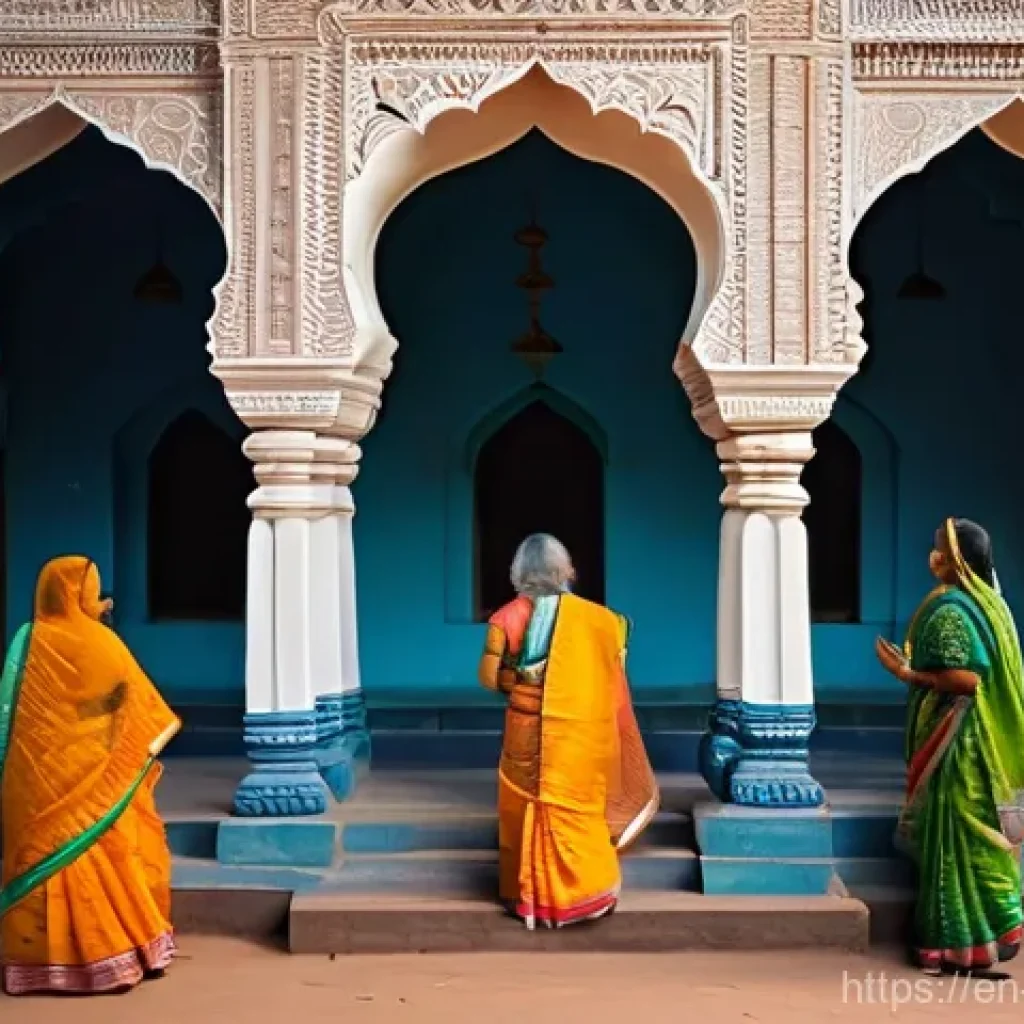
Hey there, spiritual explorers and curious minds! It’s wild, isn’t it, how faith shapes our world, sparking both incredible compassion and, at times, really tough conversations.
Today, I’m diving into a topic that has captivated me for ages: the intricate dance between Hinduism and Christian missions. We’re talking about two ancient, vibrant traditions whose paths have intertwined for centuries, creating a tapestry rich with history, profound social impact, and sometimes, unexpected friction.
It’s far more than just headlines; think about the deeply personal journeys, the quiet acts of service, and the huge cultural shifts that have occurred at their intersection.
From the historical arrival of missionaries to the modern rise of nationalist sentiments and shifting legal landscapes, particularly in places like India, the dynamics are always evolving.
I’ve spent a good deal of time trying to understand these complex relationships, observing firsthand how communities strive for understanding amidst differing beliefs, and how both traditions have influenced each other in ways many don’t even realize.
It’s a nuanced story of faith, identity, and global connection that impacts millions every single day. Understanding these connections isn’t just about history or theology; it’s about making sense of our interconnected world and fostering a genuine respect for diverse spiritual paths.
So, if you’re ready to peel back the layers and truly grasp the current trends, the challenges, and the surprising opportunities for dialogue and mutual enrichment, then you’re in the right place.
Let’s get into the nitty-gritty and explore this fascinating interplay in depth!
Whispers from the Past: How It All Began
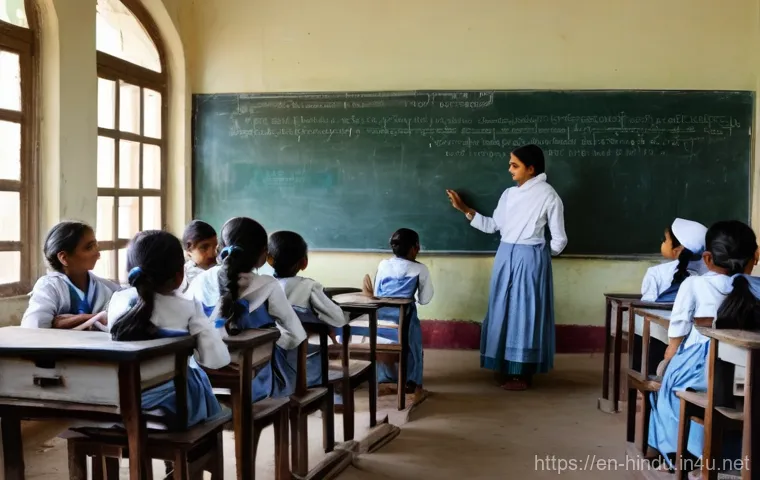
Okay, let’s rewind a bit and really dig into the foundational moments. It’s easy to think of these traditions as always existing in separate bubbles, but the truth is, their stories have been intertwined for centuries, especially in places like India. We’re talking about the very first Christian missionaries, some even tracing their arrival back to the Apostle Thomas in the 1st century, establishing early Christian communities. Can you imagine the sheer audacity and faith it must have taken to travel across vast lands, sharing a message that was so utterly new to the local cultures? It wasn’t just about converting people; it was about building relationships, learning new languages, and slowly, gently, planting seeds. The initial interactions were often subtle, perhaps more about cultural exchange than outright confrontation. It’s a testament to human resilience and curiosity, really, seeing how these groups adapted and found ways to coexist, often with mutual respect, in those very early days.
Fast forward a bit to the colonial era, and things started to shift dramatically. The arrival of European powers brought with it a different wave of missionary activity, often tied to political and economic ambitions. This period saw more organized efforts, setting up schools, hospitals, and welfare programs. I’ve read countless accounts, and what always strikes me is the incredible impact these institutions had, for better or worse, on local communities. While there were undoubtedly altruistic motives, there was also an underlying sense of cultural superiority that sometimes overshadowed genuine connection. It’s a complex legacy, one where acts of profound compassion existed alongside attempts to alter established social structures. Understanding this history isn’t about judging the past, but recognizing the deep roots of current dynamics.
The Earliest Footprints and Cultural Blending
Think about it: the very first Christian communities in India, like the Syrian Christians in Kerala, have been there for almost two millennia. They weren’t just new arrivals; they became part of the local fabric. Their language, their dress, their cuisine – it all blended with local customs. I remember visiting a church in Kerala once, and seeing elements of traditional Indian architecture alongside Christian symbols. It felt less like an invasion and more like a beautiful evolution. These early interactions were far from the later, more structured missionary movements. They were organic, slowly integrating into the existing societal norms rather than attempting to overhaul them overnight. This long-standing presence allowed for a natural intermingling of traditions, creating a unique synthesis that you just don’t see everywhere. It highlights how faith can adapt and flourish within diverse cultural contexts.
Colonial Tides and Organized Outreach
Then came the big waves – the Portuguese, the British, and others. This wasn’t just about sharing faith; it was often about expanding influence. Missionaries from this era were instrumental in establishing Western education systems and modern healthcare facilities, particularly for marginalized communities. On one hand, this brought immense benefits, opening doors to knowledge and well-being for many who had been excluded. On the other hand, it often came with a subtle, and sometimes not-so-subtle, pressure to conform. My personal take? It’s a classic example of good intentions meeting complex realities. Many individuals genuinely wanted to help, but the colonial context meant their efforts were often perceived, and sometimes were, as an extension of foreign power. It’s a vital part of the story, shaping how both Hindus and Christians view each other even today.
More Than Just Temples and Churches: A Cultural Tapestry
This is where things get really fascinating for me. When you look beyond the theological differences, you start to see how these two traditions have influenced each other culturally, in ways that might surprise you. It’s not always about direct conversions; sometimes it’s about shared ethics, artistic expressions, or even social reforms. I’ve often wondered, for instance, how much the concept of social service, so central to many Christian missions, resonated with existing Hindu traditions of *seva* (selfless service). There’s a beautiful, albeit complex, exchange happening beneath the surface, a subtle weaving of threads that creates something entirely new. You can see it in music, art, and even in philosophical discussions. It’s like two distinct rivers, flowing side by side, sometimes merging in unexpected eddies and currents, enriching the landscape for everyone.
Think about the intellectual exchange too. Scholars from both sides have engaged in deep dialogues, translating texts, debating philosophies, and often, gaining a richer understanding of their own beliefs in the process. I recall a conversation with a professor who specialized in comparative theology, and she highlighted how these encounters have often led to profound internal reflections within both Hinduism and Christianity. It’s less about one ‘winning’ over the other and more about a mutual intellectual evolution. This kind of interaction pushes boundaries and encourages a deeper introspection into core values. It’s truly a testament to the power of human intellect and spiritual curiosity, proving that even seemingly disparate worldviews can find fertile ground for growth together.
Artistic Expressions and Shared Values
It’s incredible to see how the artistic expressions of both traditions have sometimes blended. You’ll find Christian churches in India adorned with architectural motifs that echo temple designs, or devotional music that incorporates local classical forms. Similarly, some Hindu artists have been inspired by Western painting techniques introduced through mission schools. I personally love discovering these little connections – a statue of Mary with distinctly Indian features, or a Christian hymn sung to the tune of a regional folk melody. It shows that culture isn’t a rigid boundary; it’s permeable, allowing for beautiful, organic synthesis. This isn’t just imitation; it’s genuine cultural adaptation and appreciation, proving that artistic expression can transcend doctrinal lines and create something new and resonant for local communities.
Philosophical Dialogues and Mutual Learning
Beyond the visible, there’s a whole world of philosophical interaction. Thinkers and spiritual leaders from both traditions have engaged in profound dialogues for centuries. Early missionaries were often keen students of Sanskrit and Hindu scriptures, just as later Hindu reformers often studied Christian ethics and social organization. I’ve always found it fascinating how figures like Mahatma Gandhi, deeply rooted in Hindu philosophy, were also profoundly influenced by Christian teachings, particularly the Sermon on the Mount. It’s not about abandoning one’s own faith, but about finding universal truths and ethical imperatives that resonate across spiritual boundaries. This intellectual cross-pollination enriches both traditions, leading to deeper self-understanding and broader perspectives. It’s about recognizing the wisdom embedded in different paths.
Changing Lives, Changing Landscapes: The Social Footprint
You know, for all the talk about theology and doctrine, one of the most tangible impacts of Christian missions in Hindu-majority regions has been their enormous social contribution. I’m talking about the schools, the hospitals, the orphanages – institutions that have genuinely transformed lives, especially for the poor and marginalized. I’ve personally witnessed the profound difference a mission-run hospital can make in a remote village, providing care that simply wouldn’t be available otherwise. It’s often in these practical acts of service that the deepest connections are forged, transcending religious labels. These institutions weren’t just about charity; they were about empowering individuals through education and improving public health, laying foundations that have lasting societal benefits. This focus on human welfare is a powerful testament to the compassionate drive at the heart of many faiths, and it truly reshapes communities from the ground up.
Beyond direct services, there’s also the impact on social reform movements. Historically, Christian missions, particularly during the colonial era, often challenged existing social hierarchies and advocated for the rights of lower castes and women. This wasn’t always without its own set of complexities or unintended consequences, but the push for equality and dignity was undeniable. I’ve often thought about how these external pressures, combined with internal reform movements within Hinduism, contributed to significant social changes. It’s a dynamic interaction where one tradition’s focus on social justice sparked discussions and actions within another. It proves that positive change can emerge from a crucible of differing perspectives, even when those perspectives come with their own historical baggage. It’s a nuanced story of challenge and adaptation, ultimately benefiting a broader society.
Education as a Catalyst for Change
It’s hard to overstate the role of mission schools and colleges. For generations, they’ve provided quality education, often in English, opening doors to opportunities that were previously unimaginable for many. I’ve met so many people whose lives were utterly transformed by attending these institutions, gaining access to higher education and professional careers. This wasn’t just about literacy; it was about critical thinking, exposure to new ideas, and often, a pathway out of poverty. While the primary aim was often evangelism, the byproduct was a massive boost in human capital and social mobility. My personal experience has shown me that education, regardless of its original religious impetus, is one of the most potent tools for empowerment, shaping not just individuals but entire communities for the future.
Healthcare and Community Well-being
And then there are the hospitals and clinics. Imagine living in a remote area with no access to modern medicine. Mission hospitals stepped into that void, providing vital healthcare services, training local nurses and doctors, and often being pioneers in public health initiatives. I remember hearing stories about how some of these hospitals introduced vaccinations or campaigned against prevalent diseases long before government programs were widespread. These efforts often focused on the most vulnerable, addressing critical health disparities and improving overall community well-being. It’s not just about treating illness; it’s about fostering healthier populations and, in turn, more resilient communities. This practical, hands-on approach to compassion has left an indelible mark on the landscape of public health, touching countless lives directly.
When Worlds Collide: Navigating Modern Challenges
So, we’ve touched on the history and the softer cultural influences, but let’s be real: the relationship between Hinduism and Christian missions isn’t always harmonious. Especially in recent decades, we’ve seen a rise in nationalist sentiments in places like India, which has, at times, led to increased scrutiny and even friction. It feels like the stakes are higher, and the conversations are more charged. There’s a heightened awareness of identity, and sometimes, legitimate concerns about proselytization are amplified by political narratives. I’ve seen how quickly these situations can escalate, moving from discussions about faith to debates about national identity and cultural preservation. It’s a delicate balance, where protecting religious freedom must coexist with respecting existing cultural frameworks. Navigating these waters requires immense sensitivity and a genuine commitment to understanding all sides, which, frankly, isn’t always easy.
The legal landscape also plays a significant role here, with various state and national laws impacting missionary activities and religious conversions. These laws, often designed to prevent forced conversions, are sometimes criticized for inadvertently restricting genuine religious freedom. It’s a really thorny issue because you want to protect vulnerable individuals from coercion, but you also want to ensure that people have the right to choose their own spiritual path. I often find myself thinking about the individual stories caught in the middle of these broader legal and political debates. It’s a stark reminder that what might seem like an abstract legal point has very real, tangible consequences for people’s lives and their ability to practice their faith openly. The ongoing challenge is to find a way to uphold both individual autonomy and societal harmony.
Nationalism and Identity Politics
In many parts of the world, particularly in countries with a strong religious majority, the concept of national identity has become intertwined with a specific faith. This often means that Christian missionary activity, especially conversion efforts, can be viewed not just as a religious act but as a challenge to national cohesion or cultural authenticity. I’ve seen firsthand how this can create tension, with accusations of foreign interference or cultural erosion. It’s not just about belief; it’s about belonging. For many, their faith is inseparable from their heritage, and any perceived threat to one feels like a threat to the other. This complex interplay of religion and national identity is one of the defining challenges of our time, making open dialogue and mutual respect even more critical, yet often harder to achieve.
Legal Frameworks and Freedom of Religion
Many governments, particularly in India, have introduced ‘anti-conversion’ laws, ostensibly to prevent forced conversions. Now, on the surface, who can argue with preventing coercion? But the reality is far more complex. These laws can sometimes be used to harass or intimidate minority religious groups, making it incredibly difficult for them to share their faith or even conduct charitable work. I’ve often thought about the fine line between protecting individuals and restricting fundamental rights. What truly constitutes ‘force’ or ‘inducement’? It’s a legal minefield, and the interpretation and enforcement of these laws have a profound impact on the daily lives of both missionaries and converts. It’s an ongoing battle for balance, trying to ensure religious liberty while safeguarding against exploitation, a task that proves exceptionally difficult in practice.
Myths, Realities, and Personal Journeys
Okay, let’s peel back another layer and talk about the personal side of all this. Beyond the broad historical sweeps and political debates, there are millions of individual stories. Every conversion, every choice to remain in one’s ancestral faith, is deeply personal and often incredibly complex. It’s not always about grand theological arguments; sometimes it’s about a feeling of belonging, a search for meaning during a personal crisis, or simply finding a community that offers support. I’ve heard countless testimonies, and what often strikes me is the sincerity and depth of conviction on all sides. It’s easy to fall into stereotypes or to assume motives, but the reality is usually far more nuanced, driven by individual experiences and spiritual quests. We need to remember that these aren’t just abstract concepts; they are lived realities for people who are navigating their spiritual paths every single day.
There are so many misconceptions out there about both sides. Some see Christian missions as purely predatory, while others view Hinduism as static or resistant to change. The truth, as I’ve observed, is much richer. Both traditions are incredibly dynamic, constantly evolving, and filled with a vast spectrum of beliefs and practices. My own journey of understanding has been about dismantling these stereotypes and trying to see the authentic human experience at the heart of each faith. It’s about listening to people’s stories, recognizing their struggles, and appreciating their spiritual integrity. When we move beyond the headlines and truly engage with individuals, that’s when the real learning happens. It challenges us to look beyond simplistic narratives and embrace the beautiful, messy complexity of human belief. It’s a reminder that empathy is key to understanding, even when we don’t fully agree.
The Spectrum of Conversion Experiences
When someone converts, it’s rarely a simple, singular event. It’s a process, often sparked by a deep personal need, a profound encounter, or a long period of reflection. I’ve spoken with individuals who converted for a sense of community, for access to education, or because they felt a deep spiritual resonance with the teachings. Conversely, I’ve also heard stories of those who, despite exposure, found their ancestral faith to be their truest home. It’s never a one-size-fits-all scenario. To simplify these journeys into mere ‘proselytization’ or ‘resistance’ misses the entire point. Each person’s spiritual path is unique, driven by a confluence of personal, social, and spiritual factors, making it a truly individual and often profound transformation.
Dismantling Stereotypes and Fostering Understanding
We all carry preconceived notions, don’t we? But truly understanding the dynamic between Hinduism and Christian missions requires us to shed those stereotypes. For instance, the idea that Hinduism is entirely monolithic, or that Christian missions are solely about aggressive conversion, misses the vast diversity within both. I’ve found that the more I learn, the more I realize how much I don’t know, and how rich and varied each tradition truly is. It’s about approaching these topics with an open mind, willing to challenge our own assumptions, and to see the complexity and humanity in every individual’s journey. This effort to dismantle stereotypes isn’t just academic; it’s essential for fostering genuine respect and productive dialogue in a world that desperately needs it.
Finding Common Ground: Beyond Dogma
Here’s where I get really hopeful, even amidst all the challenges. Despite the theological differences and historical friction, there are so many areas where Hinduism and Christianity can and do find common ground. Think about shared ethical values – compassion, service to others, justice, and the importance of community. These aren’t exclusive to one faith; they’re universal human aspirations, deeply embedded in both traditions. I’ve often seen interfaith dialogues where, once people move past the specific rituals or doctrines, they discover a profound resonance in their core values. It’s not about diluting one’s faith, but about recognizing the shared humanity and moral imperatives that bind us together. This realization can be incredibly powerful, creating bridges where walls once stood. It reminds me that at our core, we’re all searching for meaning and connection, and those searches often lead us to similar conclusions about how we should treat one another.
Moreover, both traditions emphasize the importance of personal transformation and spiritual growth, albeit through different pathways. The idea of self-improvement, of striving for a higher moral or spiritual state, is a powerful motivator for millions. I’ve seen Hindus and Christians alike dedicate their lives to acts of selfless service, driven by their faith to make the world a better place. This shared commitment to positive action is a fertile ground for collaboration, especially on pressing global issues like poverty, environmental protection, or peacebuilding. When faith moves beyond abstract beliefs and into concrete action, it becomes a force for incredible good. It’s not about converting anyone, but about working together, side by side, recognizing that our collective efforts can create a more just and compassionate world for everyone. That, to me, is where the real magic happens.
| Area of Impact | Christian Mission Contributions | Hindu Inspired Initiatives |
|---|---|---|
| Education | Established extensive school systems, promoting literacy and modern curricula. | Founded traditional *gurukuls* and modern universities focusing on holistic learning and cultural preservation. |
| Healthcare | Pioneered hospitals and clinics, especially in rural areas, introducing Western medicine. | Developed Ayurvedic hospitals and Yoga therapy centers, emphasizing traditional healing. |
| Social Welfare | Advocated for social justice, establishing orphanages and women’s empowerment programs. | Promoted *seva* (selfless service) through various ashrams and community welfare organizations. |
| Arts & Culture | Introduced Western music, literature, and architectural styles, often adapting them locally. | Preserved classical arts, music, dance, and literature, maintaining rich cultural heritage. |
Shared Ethical Foundations and Human Values
It’s truly striking how many universal ethical principles resonate across both Hinduism and Christianity. Concepts like compassion, integrity, forgiveness, and the golden rule – treating others as you would want to be treated – are cornerstones of both faiths. I’ve often found that when I engage in conversations with individuals from either tradition, these fundamental values are often the strongest points of connection. They transcend specific doctrines or historical narratives. This shared ethical bedrock offers a powerful foundation for mutual respect and collaboration. It’s a reminder that deep down, many spiritual paths converge on similar ideals for human conduct and societal harmony. This recognition can be a profound starting point for overcoming differences and building genuine understanding.
Collaborative Initiatives for Global Good
What really excites me is seeing instances where Hindus and Christians are working together, not to convert each other, but to address shared challenges in the world. Whether it’s environmental conservation, poverty alleviation, or peacebuilding efforts, these collaborations demonstrate that faith can be a unifying force for good. I’ve heard inspiring stories of interfaith groups coming together to clean rivers, run food banks, or advocate for human rights. These are powerful examples of what happens when communities focus on their common mission of service and compassion, rather than their differences. It shows that our spiritual beliefs, far from dividing us, can inspire us to work collectively towards a more just and sustainable world. It’s a beautiful expression of faith in action, making a tangible difference.
The Road Ahead: Dialogue and Mutual Respect
So, where do we go from here? The future, as I see it, isn’t about one tradition overpowering the other, or about ignoring the very real differences that exist. It’s about fostering genuine dialogue, built on mutual respect and a sincere desire to understand. This isn’t just some academic exercise; it’s vital for creating peaceful and inclusive societies, especially in an increasingly interconnected world. I believe it starts with individuals, with each of us being willing to listen, to learn, and to challenge our own assumptions. When we approach someone with curiosity rather than judgment, the doors of understanding swing open. It’s about creating spaces where difficult conversations can happen safely, where different perspectives can be shared without fear of condemnation. This kind of open engagement is the bedrock of true harmony, allowing us to build a future where diverse faiths can coexist and even flourish together, enriching the human experience for everyone.
The journey towards greater understanding is ongoing, and it’s a marathon, not a sprint. There will always be moments of tension, misunderstandings, and disagreements. That’s just part of the human experience. But what gives me hope is the growing number of people, both within Hindu and Christian communities, who are actively seeking common ground, building bridges, and advocating for a more harmonious coexistence. It’s about recognizing the inherent dignity and spiritual value in every person, regardless of their belief system. My hope is that by continuing these conversations, by sharing our stories, and by focusing on what unites us rather than what divides us, we can collectively forge a path forward that celebrates diversity and strengthens our shared humanity. It’s a testament to the enduring power of faith, not just to inspire individual belief, but to foster peace and understanding across cultures and traditions.
Cultivating Open Dialogue and Active Listening
This sounds simple, right? But cultivating truly open dialogue and active listening is incredibly challenging, especially when deeply held beliefs are involved. It means not just waiting for your turn to speak, but genuinely trying to grasp the other person’s perspective, their emotional landscape, and their lived experience. I’ve found that when people feel truly heard, even if there’s no immediate agreement, it builds a foundation of trust that can lead to more constructive conversations down the line. It’s about recognizing that every individual’s faith journey is valid and worthy of respect. This kind of empathetic engagement is absolutely essential for bridging divides and moving beyond mere tolerance to genuine appreciation for diverse spiritual paths. It’s a skill we all need to constantly practice and refine.
Embracing Diversity as a Strength
Ultimately, the beautiful tapestry of human spirituality is enriched by its diversity. Instead of viewing differing faiths as a threat, we can choose to see them as a source of strength, offering different lenses through which to understand the divine and the human experience. I believe that when communities learn to celebrate their religious pluralism, rather than just tolerating it, they become more resilient, more vibrant, and ultimately, more compassionate. It’s about recognizing that there isn’t just one single path to truth, and that the coexistence of multiple paths can lead to a richer, more profound collective wisdom. This embraces a worldview where various spiritual traditions can coexist, each contributing its unique insights to the larger human quest for meaning and connection, truly making the world a more interesting and harmonious place.
Frequently Asked Questions (FAQ) 📖
Q: What’s the real story behind Christian missions arriving in places with strong Hindu traditions, and how did that historical meeting shape things?
A: Oh, this is such a rich tapestry of history, honestly! You might be surprised to hear that Christianity’s roots in India stretch incredibly far back, with tradition even crediting the Apostle Thomas with arriving in Kerala as early as 52 AD, establishing some of the earliest Christian communities there.
Fast forward to the 16th century, and that’s when we see the arrival of European powers, especially the Portuguese, who really kicked off the more structured missionary efforts.
They set up bishoprics in places like Goa, and figures like St. Francis Xavier became hugely influential, focusing on conversion through education and engaging with local communities along the southern coasts.
My understanding is that while this era brought significant changes, it also saw some pretty harsh methods, like the Goan Inquisition, which, let’s just say, wasn’t exactly about gentle persuasion.
Then came the Protestant missionaries, notably from the late 18th century. Think pioneers like William Carey, often called the “father of modern missions,” who arrived in India and, along with others, established missions like Serampore.
They weren’t just about preaching; they were big on setting up schools, translating the Bible into local languages (Carey even translated Hindu epics like the Ramayana into English!), and actively campaigning against deeply entrenched social evils like Sati (the practice of widow immolation).
Looking back, it’s clear that these early interactions, while sometimes fraught with colonial undertones, undeniably brought European concepts and indirectly helped spark a revival of the Indian spirit, laying groundwork for significant social reforms down the line.
It’s a complex legacy, for sure, with both admirable contributions and challenging aspects.
Q: Beyond the history books, how have Christian missions genuinely impacted local communities and individuals where Hinduism is prevalent, especially regarding social change?
A: This is where the story gets really personal and impactful, at least from what I’ve observed and read over the years. Christian missions haven’t just been about religious doctrine; their influence has profoundly reshaped communities, particularly through their unwavering focus on social welfare.
Education, for instance, was a huge game-changer. Missionaries were instrumental in establishing countless schools and colleges, like the famous Serampore College and St.
Stephen’s College. These institutions weren’t just teaching basic literacy; they introduced Western-style education, modern scientific knowledge, and the English language, which, whether you agree with it or not, opened up new pathways for many.
What’s even more crucial is that this wasn’t just for the elite; they often focused on educating lower castes and tribal communities in places like South and Northeast India, which was truly revolutionary at the time.
Beyond classrooms, healthcare was another massive area of contribution. Missionaries set up hospitals, clinics, and even specific facilities like leper colonies, as seen with figures like Mary Reed.
They brought accessible medical care to areas where it was often non-existent. But perhaps the most enduring impact I’ve found fascinating is their role in social reform.
They actively fought against systemic issues like untouchability, caste discrimination, child marriage, and bonded labor. Their advocacy often led to legislative changes, pushing for greater equality and securing rights for marginalized groups, including Dalits and tribal populations, who were frequently neglected by the mainstream society.
It wasn’t always smooth sailing, and the issue of conversion often caused tension, but the tangible improvements in education, health, and social justice for many vulnerable people are undeniable.
It truly felt like they were rolling up their sleeves and getting to work where it mattered most.
Q: In today’s world, what are the biggest hurdles and also the unexpected opportunities for dialogue between Hinduism and Christianity, especially with changing legal and political landscapes?
A: Navigating the relationship between Hinduism and Christianity today feels like walking a tightrope, if I’m being honest. The biggest hurdle we’re seeing, especially in places like India, is the rise of Hindu nationalism, often called Hindutva.
This ideology tends to view Christianity as a foreign religion and, at times, even a threat to Hindu culture and the idea of India as solely a “land of Hindus.” This narrative often fuels mistrust and can create a pretty hostile environment for Christians.
Adding to this complexity are the anti-conversion laws that several Indian states have implemented. These laws are often framed as protecting vulnerable populations from “forced conversions” but, from what I’ve observed, they’re frequently used to restrict the religious freedom of minority groups, including Christians.
We’re talking about really strict requirements, like having to notify officials if you intend to convert or marry someone of a different faith, with long waiting periods and even the risk of imprisonment and property confiscation for “unlawful conversions.” It’s heartbreaking to hear about false accusations and attacks on Christian communities that these laws can embolden.
There’s a real fear that sincere dialogue can be misconstrued as proselytization, making genuine connection incredibly difficult. Yet, even amidst these challenges, there are glimmers of hope and unexpected opportunities for dialogue.
India has this incredible, long-standing tradition of pluralism and coexistence, which is a powerful foundation to build upon. Many are realizing that dialogue isn’t just a nicety; it’s essential to break down prejudices and work together on universal goals like justice, human rights, and creating a more peaceful society.
I’ve personally seen how, when trust is built, deep conversations can challenge our own perspectives and truly enrich both traditions. There’s a growing openness among educated populations to understand Christianity better.
Organizations like the World Council of Churches and even the Catholic Church are actively prioritizing Hindu-Christian dialogue, focusing on mutual respect and collaborative social work that isn’t motivated by conversion.
It tells me that even when things are tough, the human desire for understanding and connection can still pave the way for a more respectful, interconnected world.