Hinduism, a tradition rich with diverse spiritual practices, has always fascinated me with its profound exploration of consciousness and paths to transcendence.
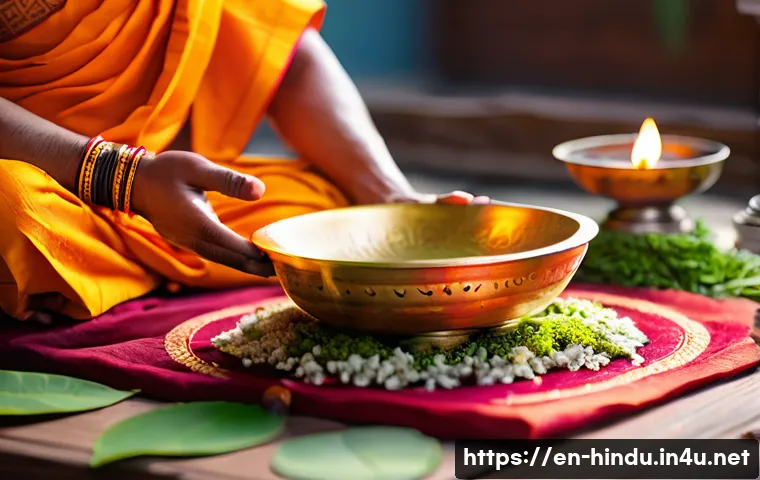
When we talk about altered states, it’s easy for our minds to jump straight to the modern understanding of “hallucinogenic experiences.” Yet, for centuries, various Hindu traditions have engaged with substances and practices designed to shift perception, not for mere recreation, but to seek deeper spiritual insights and connect with the divine.
From the ancient Vedic texts mentioning ‘Soma,’ a mysterious plant-based drink believed to confer immortality and divine visions, to the association of Lord Shiva with ‘Bhang’ (cannabis), these practices were often interwoven with complex rituals and profound spiritual goals.
It’s a journey into understanding how some of these substances, now often viewed with skepticism, were once considered sacred tools for achieving higher states of awareness and spiritual liberation.
Curious to peel back the layers of history and spirituality surrounding these intriguing connections? Let’s delve into the fascinating world of Hinduism and altered states of consciousness.
Unveiling the Ancient Roots: Soma and Vedic Rituals
When I first delved into the vast ocean of Hindu scriptures, especially the ancient Vedic texts, I was absolutely captivated by the mentions of “Soma.” It wasn’t just a drink; it was described as a deity, a divine elixir, and a pathway to immortality and profound visions.
Honestly, reading about it felt like uncovering a secret history of human consciousness. The Rigveda, in particular, dedicates entire hymns to Soma, praising its intoxicating and inspiring qualities, often linking it with poetic insight, divine power, and even the creation of the universe itself.
My own experience with understanding ancient texts always leads me to wonder about the practical realities behind these descriptions. How did they prepare it?
What did it truly feel like? It’s a mystery that has puzzled scholars for centuries, with debates ranging from whether it was a mushroom, a plant, or even a metaphor for ritualistic fervor.
But what’s undeniable is its central role in ancient Vedic sacrifices, where priests would consume it to commune with the gods and gain knowledge of the cosmic order.
This wasn’t a party drink; it was a sacred tool, handled with immense reverence and strict ritual purity, transforming the ordinary into the extraordinary for a brief, potent moment.
The idea that a substance could bridge the gap between the mundane and the divine always makes me pause and reflect on humanity’s enduring quest for transcendence.
The Elusive Nectar of Immortality
The quest for Soma in the Vedas is truly fascinating. It’s often referred to as an “elixir of immortality” (Amrita) and described with poetic grandeur, evoking images of a bright, golden liquid that flowed, invigorated, and bestowed divine powers.
Imagine the sheer intensity of those ancient rituals, with fire altars blazing and chants reverberating, as priests prepared and partook in this mysterious substance.
They believed it could grant them extraordinary strength, sharpen their intellect, and connect them directly with the gods like Indra and Agni. For me, it highlights how early spiritual seekers were exploring every avenue to touch the divine, even through what we might today consider pharmacological means, but with an entirely different spiritual intent.
The fact that its exact botanical identity remains unknown only adds to its mystique, turning it into almost a mythical quest for modern researchers. We’re talking about a substance that was so central to their worldview, it shaped their cosmology and their relationship with the divine, proving that humanity’s search for higher states of awareness is as old as civilization itself.
It really makes you think about how different cultures approach the idea of “sacred plants.”
Ritualistic Consumption and Divine Connection
The consumption of Soma wasn’t some casual affair; it was deeply embedded in elaborate Vedic rituals, known as Yajnas. These ceremonies were meticulously performed, with specific chants, offerings, and precise timings, all designed to create a sacred space where the human and divine could meet.
The priests, or Rishis, who partook in Soma, were highly revered figures, entrusted with the sacred duty of facilitating this divine communication. They weren’t just drinking; they were undergoing a transformation, aiming to achieve a state of heightened awareness where they could receive divine revelations and blessings.
From what I’ve gathered, the experience was less about a “high” in the modern sense and more about a profound spiritual experience, a merging with the cosmic consciousness.
It’s a powerful testament to the belief that certain substances, when approached with reverence and within a sacred framework, can indeed serve as keys to unlock deeper spiritual dimensions.
This kind of disciplined and ritually guided approach is a stark contrast to how many modern societies view such substances, underscoring the spiritual depth that once surrounded them.
Shiva’s Embrace: Bhang and Cannabis in Hindu Traditions
Moving forward in time, another intriguing connection emerged: the association of Lord Shiva with Bhang, a cannabis preparation. If you’ve spent any time exploring stories of Shiva, you’ll often find him depicted as an ascetic, dwelling in the Himalayas, sometimes with references to his consumption of intoxicants.
This isn’t just folklore; it’s a deeply ingrained part of certain devotional practices, particularly among Shaivites. My first encounter with this concept was honestly a bit surprising, coming from a Western background where cannabis often carries different connotations.
But in the context of Hindu spirituality, Bhang, especially during festivals like Holi and Maha Shivaratri, takes on a sacred character. It’s consumed not for recreational escape, but often as a means to transcend worldly attachments, to quiet the incessant chatter of the mind, and to achieve a state of devotional focus that facilitates connection with the divine.
I’ve heard devotees describe it as a way to emulate Shiva himself, who is said to consume it to aid his meditation and remain detached from the material world.
It’s a powerful example of how culture and spiritual intent can completely transform the perception and use of a substance.
The Lord of Ganja and Ascetic Practices
The image of Shiva as the “Lord of Ganja” or Bhang is quite prevalent, especially among certain renunciant orders like the Aghoris and Nath Yogis. These ascetics often live austere lives, focusing intensely on spiritual liberation, and for some, cannabis is seen as a legitimate aid in their spiritual journey.
It’s not about hedonism; it’s about pushing boundaries, breaking societal norms, and seeking transcendence through unconventional means. I’ve always found their practices profoundly challenging to my own preconceived notions, forcing me to look beyond surface appearances.
For these practitioners, the consumption of Bhang can be a part of their tapas (ascetic practices), helping them endure harsh conditions, deepen their meditation, and achieve states of altered consciousness where they feel closer to Shiva.
It’s a path that requires immense discipline and understanding, far removed from casual use. Their devotion transforms the act into a spiritual discipline, a way of honoring their chosen deity and accelerating their spiritual progress.
From Recreation to Reverence: Understanding Context
It’s crucial to understand the distinct difference between recreational use of cannabis and its ritualistic use within certain Hindu traditions. When Bhang is prepared and consumed in a temple setting, or during a sacred festival, with specific prayers and intentions, it moves from the realm of mere enjoyment to that of sacred communion.
It becomes prasad, an offering to the deity that is then consumed by devotees, imbued with spiritual significance. My personal take is that the intent behind any practice truly dictates its spiritual value.
When used with reverence, as part of a structured spiritual practice, it’s believed to aid in inner purification and detachment, opening the mind to spiritual insights that might otherwise be obscured by the ordinary mental state.
It’s a reminder that context is everything when we try to understand diverse spiritual practices; what might seem unconventional from one perspective can be profoundly sacred from another.
Beyond Substances: Meditation and Yogic Trance States
While substances often capture the headlines, the vast majority of Hindu spiritual traditions emphasize inner technologies for altering consciousness.
This is where yoga and meditation truly shine. My own journey into Hinduism, particularly through Raja Yoga, has opened my eyes to the incredible power of the mind to transcend its ordinary limits without any external aids.
It’s a journey of self-discovery, where deep concentration and introspection lead to profound shifts in perception and awareness. Think about it: ancient yogis, sitting in caves or forests, completely focused on their breath or a mantra, achieving states of consciousness that sound truly out of this world.
These aren’t just stories; these are techniques developed over millennia, passed down from guru to disciple, designed to systematically train the mind to achieve higher states.
I’ve found that even a simple, consistent meditation practice can begin to peel back the layers of mental conditioning, revealing a deeper sense of self and connection to something larger than myself.
It’s challenging, absolutely, but the rewards are immeasurable – a profound sense of peace, clarity, and an expanded awareness that no external substance can permanently provide.
The Inner Alchemy of Raja Yoga
Raja Yoga, often called the “royal path” of yoga, is a prime example of a disciplined, methodical approach to achieving altered states of consciousness.
It’s not about physical postures (though those are often part of preparatory practices); it’s about controlling the mind. The eight limbs of yoga, culminating in Samadhi, are a step-by-step guide to mastering the internal landscape.
From ethical restraints (Yamas and Niyamas) to breath control (Pranayama) and focused concentration (Dharana), each limb builds upon the last, preparing the practitioner for deeper states of meditation (Dhyana).
My personal experience with pranayama has been eye-opening; it’s astonishing how simply regulating your breath can impact your mental state, bringing about a profound sense of calm and clarity that feels very different from my usual busy mind.
This “inner alchemy” transforms ordinary consciousness into a heightened state of awareness, where the boundaries of the self begin to dissolve, and a deeper reality emerges.
It’s a testament to the idea that the most powerful tools for transformation often lie within us.
Samadhi: The Apex of Consciousness
Samadhi is the ultimate goal of Raja Yoga, a state often described as transcendental consciousness or superconsciousness. It’s not a mere trance, nor is it unconsciousness; rather, it’s a state of profound absorption where the meditator’s mind becomes one with the object of meditation.
There are different levels of Samadhi, from those where a subtle distinction remains between the observer and observed, to Nirvikalpa Samadhi, where all distinctions vanish, and the individual consciousness merges with the universal consciousness.
I’ve had moments in deep meditation where the sense of “me” fades, and I feel a profound sense of interconnectedness, a taste of what Samadhi might be like.
It’s an incredibly powerful experience, one that shifts your entire perspective on reality. This is an altered state of consciousness achieved purely through inner discipline and spiritual practice, a testament to the immense untapped potential of the human mind and spirit.
It’s the ultimate goal for many yogis, a state of liberation and profound insight achieved through sustained effort and devotion.
The Tantric Path: Altering Perception for Spiritual Awakening
Tantra, often misunderstood in the West, is another profound path within Hinduism that engages with altered states of consciousness, not always through substances, but through a variety of intense practices.
When I first started learning about Tantra, I had to unlearn so many popular misconceptions. It’s not just about sexuality, though that can be one aspect; it’s a sophisticated system designed to awaken spiritual energy and expand consciousness.
Tantric practices often deliberately challenge conventional norms and perceptions to break free from limitations and achieve a direct experience of ultimate reality.
This can involve intense visualizations, powerful mantras, specific breathing techniques, and even ritualistic engagements with aspects of life that might traditionally be considered taboo.
The goal is to integrate all aspects of existence – the sacred and the profane, the light and the dark – into a unified spiritual experience. It’s a path that requires immense courage, a strong teacher, and a willingness to confront one’s deepest fears and attachments, transforming them into fuel for spiritual awakening.
Challenging Norms for Higher Truths
One of the most striking aspects of Tantra is its willingness to challenge conventional societal and religious norms. Tantrics often engage in practices that seem unconventional or even shocking to outsiders, precisely to break through ingrained patterns of thought and perception.
This could involve meditation in cremation grounds, associating with “outcast” elements of society, or utilizing substances or symbols that might be considered impure by mainstream traditions.
The underlying philosophy is that true spiritual liberation lies beyond dualities and conventional morality; by confronting and integrating what is normally rejected, practitioners can achieve a more holistic and unconditioned state of awareness.
For me, this resonates deeply with the idea that growth often happens outside our comfort zones. It’s about shedding layers of conditioning to see reality as it truly is, rather than through the filters of societal expectations.
This path isn’t for the faint of heart, but for those who dare, it promises profound shifts in consciousness and a radical reorientation towards spiritual truth.
The Role of Ritual and Symbolic Substances
Within Tantra, rituals are incredibly potent tools for altering consciousness. These are not empty gestures but carefully designed sequences of actions, visualizations, and chants intended to create a powerful energetic field.
Sometimes, symbolic substances are used within these rituals, not as intoxicants, but as aids for focus, purification, or to represent specific energies.
For instance, specific herbs, oils, or even animal products might be used symbolically to invoke certain deities or energies, or to facilitate specific internal shifts.
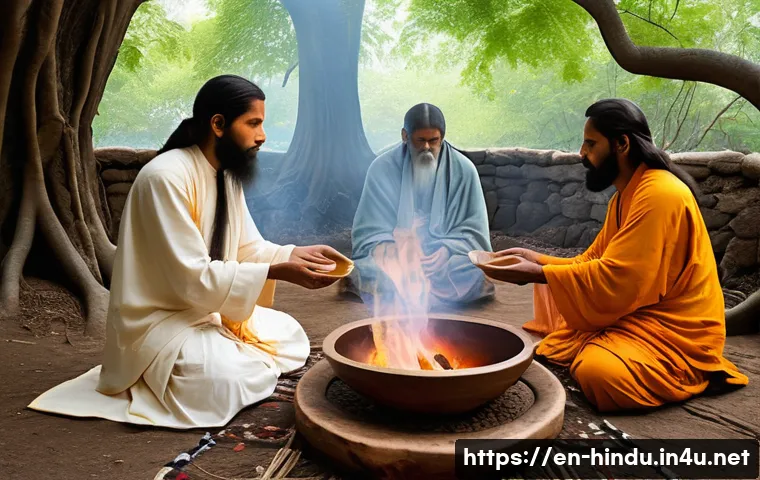
I’ve always been fascinated by the power of ritual to shape experience; it creates a container for profound transformation. The intention and symbolism behind these substances are paramount; they are integrated into a larger framework of spiritual practice aimed at accelerating the practitioner’s journey toward awakening.
It’s a sophisticated interplay of mind, body, and spirit, orchestrated to induce non-ordinary states of consciousness for the purpose of spiritual evolution.
Festivals and Ecstasy: Collective Consciousness Shifts
It’s not just individual practice or specific substances that can lead to altered states within Hinduism; the collective energy of festivals can be incredibly powerful.
My visits to India and my participation in Hindu festivals in my own community have shown me firsthand how mass gatherings, devotional singing, and shared spiritual intention can create a palpable shift in collective consciousness.
Think about the sheer energy of thousands, even millions, of people gathered together, all focused on a common spiritual purpose. The atmosphere becomes charged, almost electric, and it’s easy to feel swept up into a state of heightened emotion and spiritual fervor.
This isn’t about any substance; it’s about the raw power of human connection and shared devotion. When voices rise in unison during a kirtan or bhajan, or when crowds surge with devotion towards a sacred river during a pilgrimage, individual identities often dissolve into a greater collective experience, leading to moments of profound spiritual ecstasy and unity.
It’s a beautiful demonstration of how communal practice can be a potent pathway to transcendence.
Kumbh Mela: A Million Hearts, One Spiritual Pulse
The Kumbh Mela is arguably the largest spiritual gathering on Earth, drawing tens of millions of pilgrims to bathe in sacred rivers. I can only imagine the intensity of being amidst such a colossal congregation.
While I haven’t personally attended, friends who have described it as an overwhelming, transformative experience where individual ego seems to vanish amidst the sea of humanity.
The sheer scale, the continuous chanting, the presence of countless sadhus and yogis, all contribute to an atmosphere ripe for collective altered states.
Pilgrims report profound spiritual experiences, a sense of purification, and a deep connection to the divine mother Ganga. It’s a testament to the power of faith and collective intention to create an environment where the veil between the mundane and the spiritual feels incredibly thin.
This isn’t about individual substances; it’s about the collective spiritual current, an energetic field so potent it can shift the consciousness of an entire gathering.
Bhajans and Kirtans: Chanting into Transcendence
If you’ve ever been to a kirtan or bhajan (devotional singing), you’ll know what I’m talking about. The repetitive chanting of divine names, often accompanied by musical instruments, has a hypnotic quality that can effortlessly lead to altered states.
I remember attending my first kirtan and feeling initially self-conscious, but as the chanting built, and the energy in the room intensified, I found myself completely immersed.
My mind quieted, my heart opened, and a sense of pure joy and peace washed over me. It’s a powerful, accessible form of spiritual practice that doesn’t require any external substances, just an open heart and a willingness to participate.
The vibrations of the chants, the collective voices, and the focus on the divine create an internal shift, allowing practitioners to transcend ordinary awareness and experience a direct connection with the divine, often described as a state of ecstatic bliss.
It’s a reminder that sometimes the simplest practices can lead to the most profound experiences.
Navigating Modern Interpretations and Misconceptions
In today’s world, discussing altered states, especially those involving substances, often gets tangled in modern legal and societal frameworks. It’s easy for the spiritual intent behind ancient Hindu practices to be misinterpreted or conflated with recreational drug use.
This is where my role as a blogger comes in – to help clarify and differentiate. The key distinction, as I’ve repeatedly emphasized, lies in intent, context, and the overarching spiritual framework.
Ancient traditions didn’t use substances for casual escapism; they used them as part of rigorous spiritual disciplines, often overseen by experienced guides, with profound spiritual liberation as the ultimate goal.
The dangers of unguided, recreational use are universally recognized, and these are far removed from the sacred, disciplined contexts of traditional Hindu practices.
It’s a fine line to walk, understanding the historical significance while also acknowledging modern realities and legalities. We have to be mindful not to romanticize past practices without understanding their full context and the wisdom with which they were traditionally approached.
The Fine Line Between Spirituality and Recreation
This is where the conversation gets tricky. How do we differentiate between a sincere spiritual quest and simple recreational use? For me, the answer lies in intention, discipline, and reverence.
When a substance or practice is integrated into a comprehensive spiritual path, with guidance, ethical considerations, and a clear goal of spiritual growth or liberation, it falls into the realm of sacred practice.
When it’s used primarily for pleasure, escape, or without a deeper spiritual context, it slides into recreation. It’s a distinction that thoughtful practitioners and seekers must always consider.
I’ve often seen people explore spiritual paths out of curiosity, which is wonderful, but it’s crucial to approach any practice that alters consciousness with respect, caution, and ideally, under the guidance of a knowledgeable teacher.
It truly is about understanding the spirit of the practice, not just the surface-level action.
Reclaiming the Sacred in a Secular World
In our increasingly secular world, it’s a challenge to appreciate the sacred dimensions of practices that might seem unconventional. My hope is that by exploring these historical and spiritual connections within Hinduism, we can broaden our understanding of human spirituality and the diverse ways in which people have sought to connect with the divine.
It’s about recognizing that humanity’s search for transcendence is universal, even if the methods differ across cultures and eras. Reclaiming the sacred means looking beyond modern biases and trying to understand practices within their original cultural and spiritual contexts.
This doesn’t mean advocating for practices that are illegal or harmful today, but rather appreciating the depth and complexity of spiritual traditions that have often been oversimplified or misunderstood.
It encourages a more open-minded approach to spiritual exploration, recognizing the profound wisdom embedded in ancient paths.
| Practice/Substance | Associated Deity/Tradition | Primary Intent/Effect | Traditional Context |
|---|---|---|---|
| Soma | Vedic Gods (Indra, Agni) | Divine inspiration, immortality, visions | Ancient Vedic Yajnas (fire rituals) |
| Bhang (Cannabis) | Lord Shiva, Shaivism | Detachment, aid to meditation, spiritual focus | Maha Shivaratri, Holi, ascetic practices |
| Meditation/Yoga | Various Deities/Philosophies | Inner peace, self-realization, Samadhi | Daily practice, guru-disciple lineage |
| Tantric Rituals | Shakti, Shiva | Awakening Kundalini, spiritual liberation, integration | Specific Tantric lineages, under guidance |
| Kirtan/Bhajan | Any Deity (Bhakti Yoga) | Ecstatic devotion, collective consciousness, bliss | Temple gatherings, festivals, personal practice |
My Personal Journey into Hindu Spiritual Practices
You know, my fascination with altered states in Hinduism isn’t just academic; it’s deeply personal. As someone who’s always been curious about consciousness, these traditions offered a roadmap to understanding not just the world around me, but also the world within.
When I first started exploring meditation and bhakti yoga, I wasn’t looking for a “high” or an escape. I was looking for answers, for a deeper connection to something meaningful.
And what I found was truly transformative. The quiet moments on my meditation cushion, the sometimes challenging but always enlightening process of self-inquiry, and the profound joy I’ve experienced during kirtans have all been forms of altered consciousness, bringing me closer to a sense of inner peace and expansive awareness than anything else.
It’s been a journey of consistent effort, of learning to sit with discomfort, and of gradually peeling back the layers of my own conditioning. And I can tell you, the experiences that come from dedicated practice are far more sustaining and impactful than any fleeting external experience could ever be.
Finding My Path: A Westerner’s Perspective
As a Westerner, my initial approach to Hindu spirituality was admittedly filtered through a different cultural lens. I had to learn to set aside preconceived notions and simply be open to the wisdom being offered.
It wasn’t always easy. Some concepts felt alien, and some practices challenged my deeply ingrained ways of thinking. But the beauty of Hinduism, for me, lies in its incredible diversity and its profound psychological depth.
I didn’t just read about these altered states; I tried the meditation techniques, explored the philosophy, and engaged with the devotional practices. It wasn’t about blindly adopting something new, but about finding what resonated deeply within my own being.
This journey has been about discovering universal truths expressed through a rich cultural tradition, and it’s taught me so much about the human mind’s capacity for profound spiritual experiences, accessible to anyone willing to put in the effort.
The Profound Impact of Bhakti and Meditation
My personal experience has really been shaped by Bhakti Yoga, the path of devotion, and various meditation techniques. I’ve found that chanting mantras and participating in kirtans can truly elevate my spirit, bringing an almost palpable sense of joy and connection that’s hard to describe.
It’s a heart-opening experience that bypasses the intellectual mind and touches something much deeper. Similarly, my regular meditation practice, even just 20 minutes a day, has profoundly impacted my mental clarity and emotional resilience.
It’s not about achieving a constant state of bliss, but about cultivating an inner sanctuary, a place of stillness from which I can navigate the complexities of daily life with more grace and wisdom.
These practices have shown me that altering consciousness isn’t just about dramatic, instantaneous shifts, but also about subtle, profound transformations that unfold over time, leading to a more enriched and spiritually aware existence.
It’s truly a journey worth taking.
Closing Thoughts
As we wrap up this journey through the diverse landscape of altered states within Hinduism, I hope you’ve gained a deeper appreciation for the nuanced and often profound ways in which people have sought to connect with the divine. It’s truly a testament to humanity’s enduring quest for transcendence, whether through ancient elixirs, disciplined meditation, or the electrifying energy of collective devotion. My own exploration has taught me that the path is deeply personal, but the underlying drive to understand ourselves and our place in the cosmos is universal. Remember, it’s all about intent, context, and finding a practice that truly resonates with your spirit.
Helpful Insights to Keep in Mind
1. It’s incredibly important to distinguish between the ancient, ritualistic use of substances like Soma or Bhang and their modern, recreational counterparts. For the Vedic rishis and Shaivite ascetics, these weren’t about casual highs; they were meticulously integrated into sacred ceremonies and spiritual disciplines, often under strict guidance, with the ultimate goal of spiritual liberation or profound communion. The reverence, intention, and structured environment transformed them into sacred tools, rather than mere intoxicants. This critical difference is often lost in contemporary discussions, leading to misunderstandings about the depth and purpose behind these ancient practices. Reflecting on this helps us approach diverse spiritual traditions with more respect and a deeper intellectual honesty, acknowledging their historical and cultural contexts rather than imposing modern biases. It challenges us to look beyond surface actions and delve into the spiritual heart of the practice.
2. The human mind is an incredibly powerful tool for transformation, capable of achieving profound altered states without any external substances. My own journey with meditation and Raja Yoga has been a testament to this. These “inner technologies,” developed over millennia, offer a systematic path to higher consciousness through discipline, focus, and introspection. Think about the incredible dedication of yogis who sit for hours, days, or even years, cultivating inner stillness and expanding their awareness purely through mental and energetic practices. This isn’t just theory; it’s a living tradition of self-mastery that emphasizes the potential within each of us. It truly inspires me to remember that the most potent pathways to transcendence often lie within our own consciousness, waiting to be explored through consistent effort and an open heart, offering lasting peace and clarity that no external aid can replicate.
3. Always approach spiritual exploration, especially practices that alter consciousness, with immense respect and a spirit of inquiry. This means seeking knowledgeable guides or teachers, understanding the philosophical underpinnings of a tradition, and proceeding with caution and an ethical framework. Blindly experimenting with practices, particularly those involving substances, without proper context or guidance can be counterproductive, and even harmful. My personal experiences have taught me the value of a trusted mentor, someone who can illuminate the path and help navigate its complexities. It’s like embarking on a trek in unknown territory; having an experienced guide makes all the difference, ensuring safety and a more fruitful journey. This responsible approach ensures that your spiritual quest remains grounded, purposeful, and genuinely transformative, honoring both the tradition and your own well-being.
4. The communal aspect of Hindu spiritual practices, particularly festivals like Kumbh Mela or devotional singing (kirtan and bhajan), demonstrates the incredible power of shared intention. There’s something truly magical that happens when thousands of voices and hearts unite in a common spiritual purpose. The individual ego often dissolves into a larger collective consciousness, leading to moments of profound ecstasy and a deep sense of unity. It’s an altered state achieved not through ingestion, but through resonance and collective energy. I’ve felt this firsthand in kirtans, where the vibrations and shared devotion create an almost tangible shift in the room, filling it with joy and peace. These experiences remind us that spiritual growth isn’t always a solitary journey; sometimes, the most powerful transformations occur when we connect with others in a shared spiritual pursuit, amplifying our individual experiences into something far greater.
5. Open-mindedness and cultural humility are absolutely essential when exploring spiritual traditions vastly different from your own. It’s easy to project our modern or Western biases onto ancient practices, leading to misunderstandings or dismissals. Instead, cultivating a sense of curiosity and a willingness to learn without judgment allows for a much richer and more accurate understanding. What might seem unconventional or even strange from one cultural perspective often holds profound meaning and spiritual depth within its original context. My own journey into Hinduism required me to constantly question my assumptions and remain receptive to new ways of seeing the world. This doesn’t mean uncritically accepting everything, but rather seeking to understand *why* certain practices exist and *what* their intended spiritual outcomes are. It enriches not only our understanding of other cultures but also our own spiritual journey, broadening our horizons and fostering a more inclusive worldview.
Key Takeaways
Hindu traditions offer a rich tapestry of approaches to altered states of consciousness, from the ancient Vedic use of Soma to the devotional practices of Bhang associated with Shiva. Beyond substances, meditation, yoga, and Tantric rituals provide powerful inner technologies for spiritual awakening and self-realization. Collective experiences in festivals and kirtans also foster profound shifts in awareness. The crucial element across all these paths is the importance of intent, context, and dedicated spiritual practice, distinguishing them sharply from mere recreational use. My personal journey reinforces that genuine transformation stems from disciplined effort and an open heart, leading to a deeper connection with oneself and the divine.
Frequently Asked Questions (FAQ) 📖
Q: What exactly were “Soma” and “Bhang” in ancient Hindu traditions, and why were they considered so significant?
A: From what I’ve gathered in my deep dives into these ancient traditions, “Soma” and “Bhang” were incredibly fascinating substances, but they weren’t just about getting an altered state for the sake of it.
Soma, especially, is steeped in mystery and reverence. It’s described in the ancient Vedic texts as a sacred plant, though its exact botanical identity is still debated by scholars today.
The juice from this plant, when prepared in rituals, was believed to be a divine drink that could bestow immortality, divine visions, and profound spiritual insights.
Imagine something so potent it was deified, even having a god named Soma! It was a fundamental part of Vedic sacrifices, a conduit to the divine, meant to enhance spiritual connection and well-being.
Then there’s Bhang, which is derived from the cannabis plant. Unlike Soma, its identity is well-known, and its association is famously with Lord Shiva.
Now, before you jump to conclusions, this wasn’t about recreational use. Bhang was, and in some ascetic traditions still is, interwoven with rituals and deep spiritual goals, particularly for devotees of Shiva.
It symbolized detachment from the material world, purity of mind, and a way to quiet the senses for deeper meditation and connection with higher consciousness.
I’ve found it so interesting how it was consumed not for indulgence, but as an offering, a ‘Prasad,’ during festivals like Maha Shivratri and Holi, symbolizing surrender and spiritual purification.
It’s all about intention and context, which really sets it apart from modern recreational drug use.
Q: How did the traditional use of these substances in Hinduism differ from modern recreational drug use?
A: This is a crucial question, and it’s something I often think about when exploring these historical connections. The biggest difference, from my perspective, boils down to intention and context.
In ancient Hinduism, substances like Soma and Bhang were considered sacred tools, used within very specific ritualistic and spiritual frameworks. They weren’t about escaping reality; they were about accessing a deeper reality, transcending ordinary consciousness to achieve spiritual insights or connect with the divine.
Think about it: Soma was part of elaborate Vedic sacrifices performed by priests, meant for the prosperity of both humans and gods. Bhang was offered to deities, especially Lord Shiva, and consumed by devotees to aid in meditation, achieve mental clarity, and cultivate detachment from worldly desires.
These practices were often accompanied by mantras, strict disciplines, and a profound sense of reverence. There was an underlying purpose of spiritual progress, liberation, and purification.
In contrast, modern recreational drug use, while varied, often centers around pleasure, altered perception for entertainment, or escaping daily stressors.
The focus isn’t typically on spiritual enlightenment or connection with a divine purpose within a structured, sacred context. It’s truly a different ballgame when you consider the disciplined, intentional, and often ascetic approach seen in traditional Hindu practices versus the more casual, often unguided, approach of recreational use.
Q: Are such substance-based practices still common or accepted in mainstream Hinduism today?
A: That’s a great question that often comes up, especially given our modern understanding of these substances. While the historical use of substances like Soma and Bhang is undeniable and fascinating, their role in mainstream Hinduism today is significantly different.
The traditional preparation and consumption of Soma, for instance, has largely been lost to history; its exact plant identity is still a mystery, and the practices surrounding it are no longer common.
With Bhang, it’s a bit more nuanced. You’ll still find it being prepared and consumed during certain Hindu festivals, like Holi and Maha Shivratri, in parts of India.
For many devotees, it remains a symbolic offering to Lord Shiva and a way to enhance spiritual focus, not for intoxication in the recreational sense. However, it’s important to understand that this is often within a very specific cultural and ritual context, and it’s not universally practiced or encouraged across all Hindu traditions.
Many Hindu traditions, especially those emphasizing asceticism, purity, and disciplined meditation (like most forms of Hatha Yoga or Vedanta), actually prescribe abstinence from intoxicants.
The general sentiment in mainstream Hinduism leans towards achieving altered states of consciousness through practices like yoga, meditation, and devotion (Bhakti), rather than through external substances.
So, while the historical connection is rich, it’s fair to say that substance-based practices are either esoteric, symbolic, or largely absent in the broader landscape of contemporary Hindu spirituality.